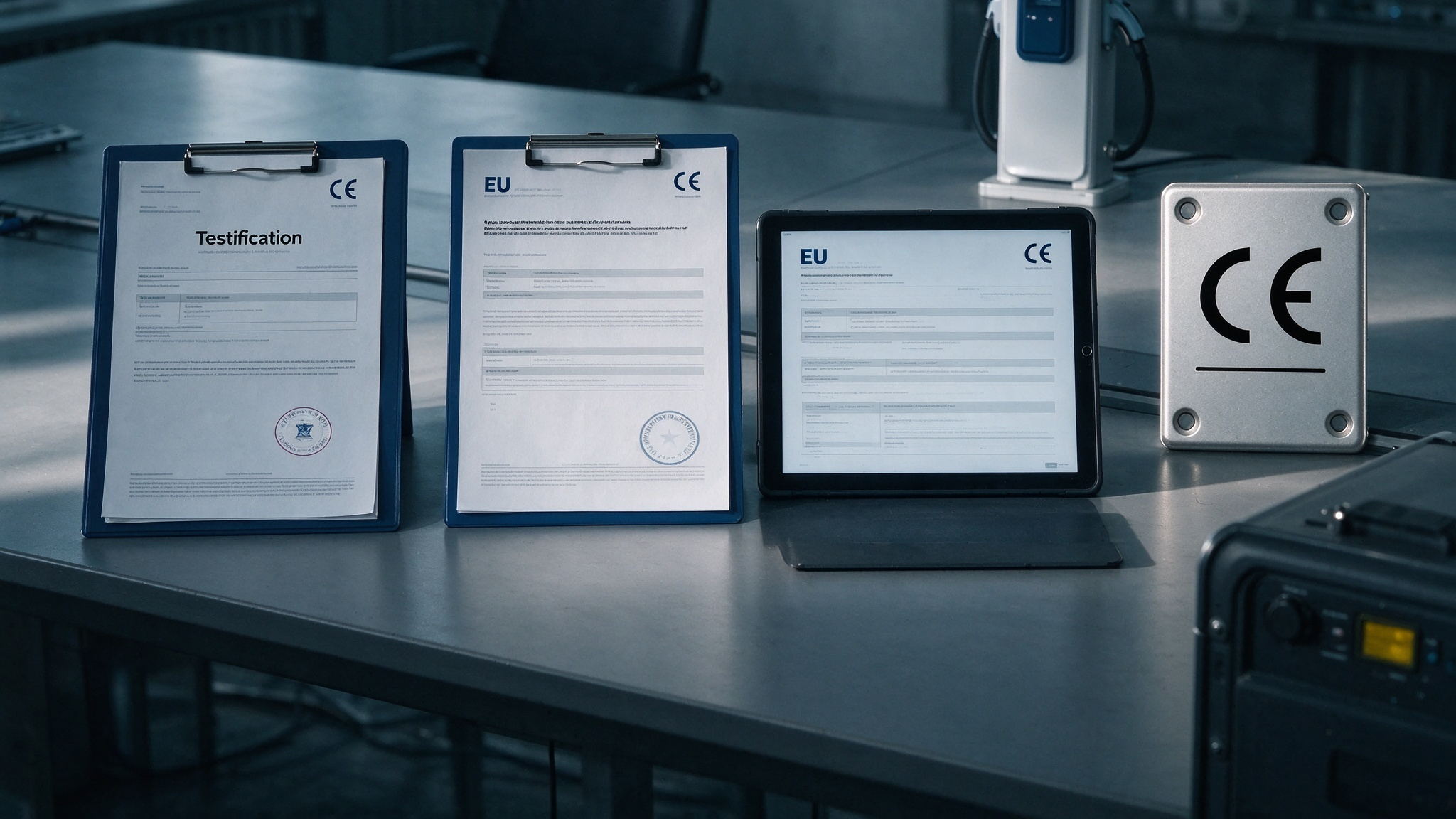
Many of you who export to Europe have probably noticed a change:
I got it a few years ago, but the organization doesn't careTUVWhether the European Standard certificate was issued by Intertek or CSA, you can still see it in the header or corner of the certificate. CE mark; but the newly issued certificates are completely clean—there is no longer any CE Signs. Many salespeople, buyers, and factories are panicking:
“Is the certificate invalid? Has the agency stopped issuing it CE? Can this certificate still be used for customs clearance and to sell products in the EU?”
In fact:
It’s not that the certificate has expired, nor is it that the organization is refusing to issue it. CE—the new EU regulations explicitly state that the CE mark does not belong to third-party testing organizations in the first place and is not permitted to be printed on testing or certification certificates.

I. First, let’s clear up one of the most common misconceptions: Who is responsible for CE?
The full name of CE is Conformité Européenne, which means “conformity with European Union requirements.”
CE is not a “certification logo” issued by TUV, Intertek, or SGS.
CE is the “manufacturer’s own legal statement”:
We (the manufacturer) hereby certify that this device complies with all applicable EU regulations, including the Low Voltage Directive (LVD), EMC Electromagnetic Compatibility (EMC), and the Radio Equipment Directive (RED) for wireless communication (including Bluetooth and Wi-Fi). The technical documentation is complete, the risk assessment has been conducted, and we are willing to assume full legal responsibility.

II. Why has printing suddenly been banned?
The European Union published a new edition of the “Blue Guide” in 2022, followed by several subsequent publications; the European Accreditation Cooperation (EA) has also explicitly required the following:
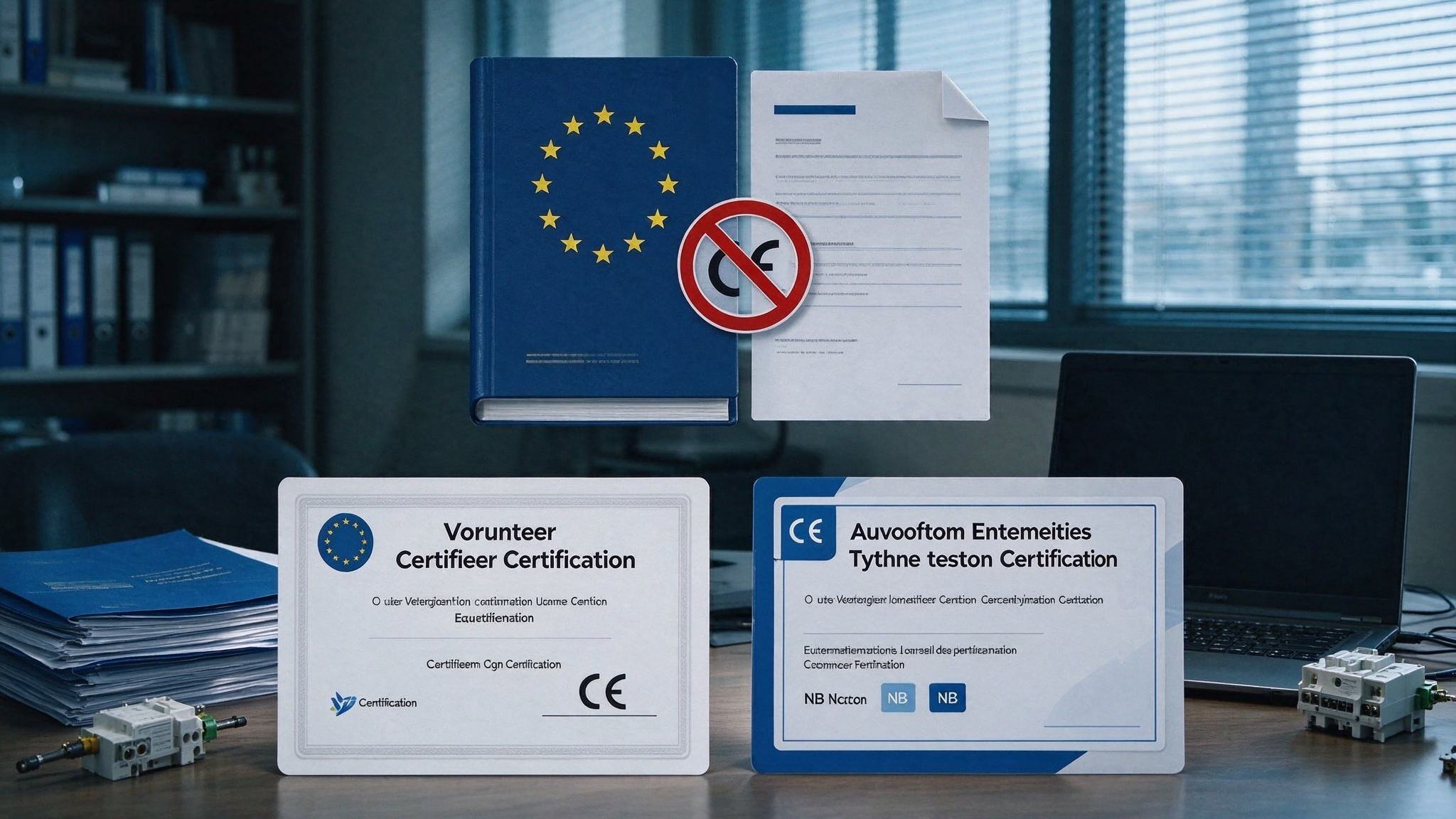
The CE mark may only be affixed to the “product itself” by the manufacturer; Test certificates, type examination certificates, and voluntary AOC certificates issued by Notified Bodies “must not bear the CE mark” to prevent significant misunderstandings by buyers, customs authorities, and market regulators, who might mistakenly believe that “CE is issued by TUV/Intertek/SGS/CSA, and that these bodies bear responsibility.”
To clarify the difference between the two certificates—many people get confused about this:
1) Voluntary AOC (Attestation of Conformity) Certificate: The vast majority of electrical equipment under the LVD now uses this type of certificate, where a testing body conducts tests to certify that the sample complies with harmonized standards; the CE designation is no longer permitted under any circumstances; this is the type of certificate that everyone is currently receiving;
2) Type-examination Certificate issued by a Notified Body (NB): A few high-risk products are required to follow this procedure; the certificate itself cannot bear the CE mark, but will only display the NB number of the Notified Body; the CE mark remains on the manufacturer’s Declaration of Conformity and on the product.
III. Key Point: If the certificate does not include CE, how can I export to the EU?
First, you need to know what you’re required to provide under the regulations.
During inspections by customs and market regulation authorities, they “prioritize checking the DoC + product CE + technical documentation,” rather than checking whether the certificate bears the CE mark.
A complete charging station CE compliance package consists of the following components, all of which are essential:
1. Test certification issued by an authorized body + complete test report (LVD, EMC, RED, etc.)
2. An “EU Declaration of Conformity (DoC)” prepared, signed, and stamped by the manufacturer (this DoC must include the CE mark, applicable directives, standards, and product information)
3. Complete Technical Documentation (TCF) (schematics, BOM, risk assessment, nameplate drawings, user manual, etc.)
4. The product nameplate and outer packaging must be correctly marked with the CE label.
Many veteran salespeople still cling to the outdated belief that “a certificate bearing CE is the only valid CE certificate.” However, this format is now explicitly prohibited by EU regulations.