

In September, Xiamen and Chongqing successively issued notices regarding applications for 2026 charging infrastructure subsidies.
If you look only at the subsidy amounts—Xiamen subsidizes based on electricity sales, Chongqing provides 30,000 per charging station for ultra-fast charging stations, and 250,000 per charging nozzle for heavy-duty trucks—you might think that subsidies are still increasing.
However, if you take a closer look at the eligibility requirements, you’ll notice a clear trend:Subsidies are shifting from"Get Paid to Install Computers"Steering"Pay for Verifiable Performance"..Individual charging station power output, average monthly charging volume per station, platform integration, metered electricity consumption, and smart, orderly charging—these technical requirements are becoming prerequisites for applying for subsidies.
01 Xiamen Subsidies: An Electricity Consumption Threshold—Who Does It Exclude?
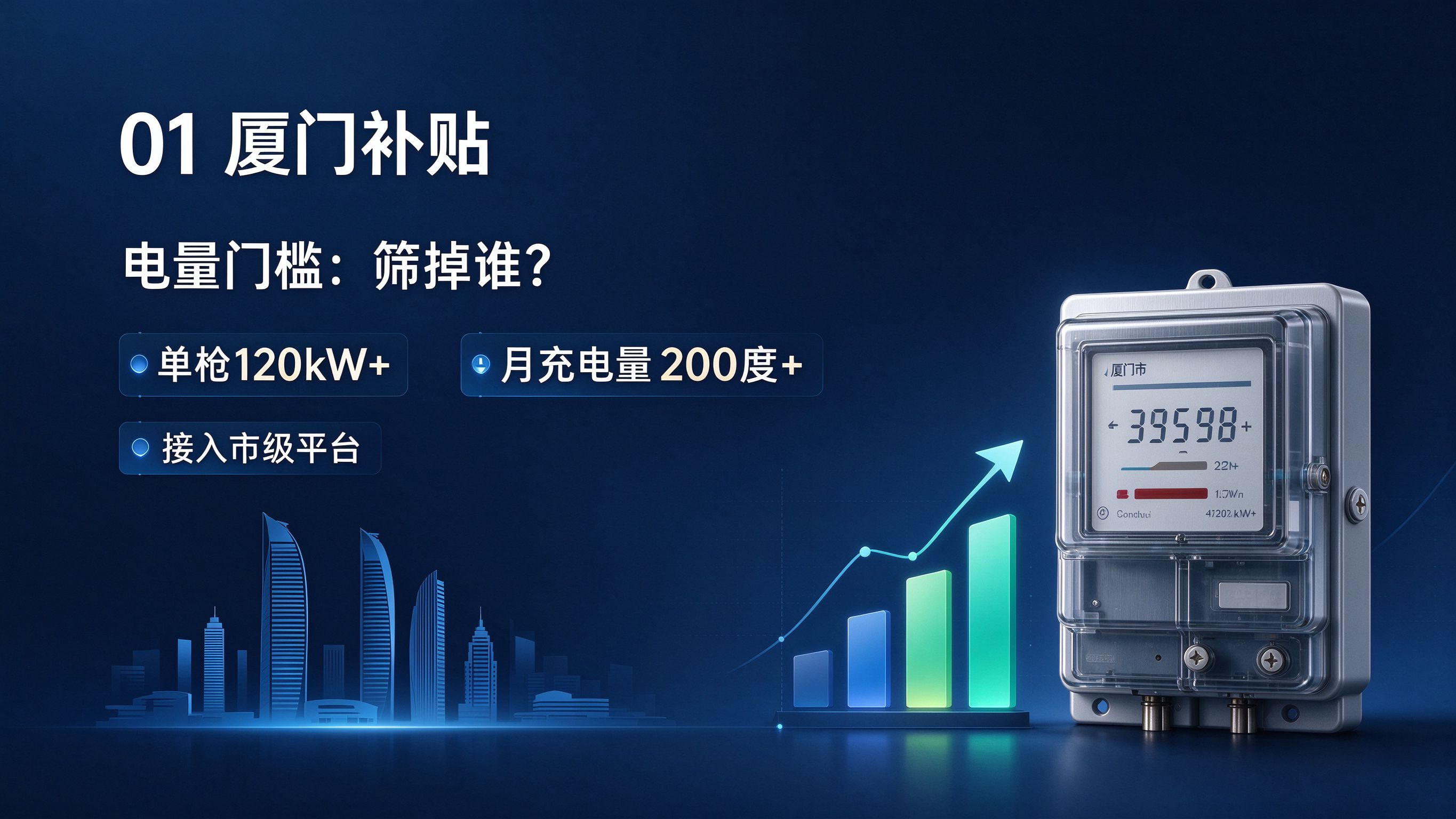
Notice on Applications for Xiamen’s 2026 Electric Vehicle Charging Infrastructure Support and Subsidy Program (Issued on September 3): Operating subsidies will be provided based on the amount of electricity charged for commercial purposes:
- 0.1 yuan per kilowatt-hour on the island, with a cap of 40 yuan per kilowatt per year;
- 0.15 yuan per kilowatt-hour outside the island, with a cap of 70 yuan per kilowatt per year;
- The total subsidy shall not exceed the actual charging service fees collected.
The key criteria are the application thresholds: a maximum rated output power of 120 kW or more per charging gun, or an average power output of 80 kW or more per charging gun; a monthly average charging volume of at least 200 kilowatt-hours per charging gun; connection to a municipal-level platform and compliance with data quality requirements; the ability to meter electricity consumption and support smart, orderly charging; and no history of major safety incidents or administrative penalties.
What does this mean?
If you’ve installed a number of low-power, slow-charging stations and the average monthly charging volume is very low, the subsidy doesn’t apply to you. If your charging stations aren’t connected to the municipal monitoring platform, or if the data uploaded to the platform doesn’t match the actual meter readings, you won’t receive the subsidy either.
The logic behind subsidies has changed: the focus is no longer on rewarding "how many charging stations have been installed," but rather on rewarding "how well the stations are used and whether the data is reliable."
02 Chongqing Subsidies:25Ten thousand/Compliance Requirements for Firearms
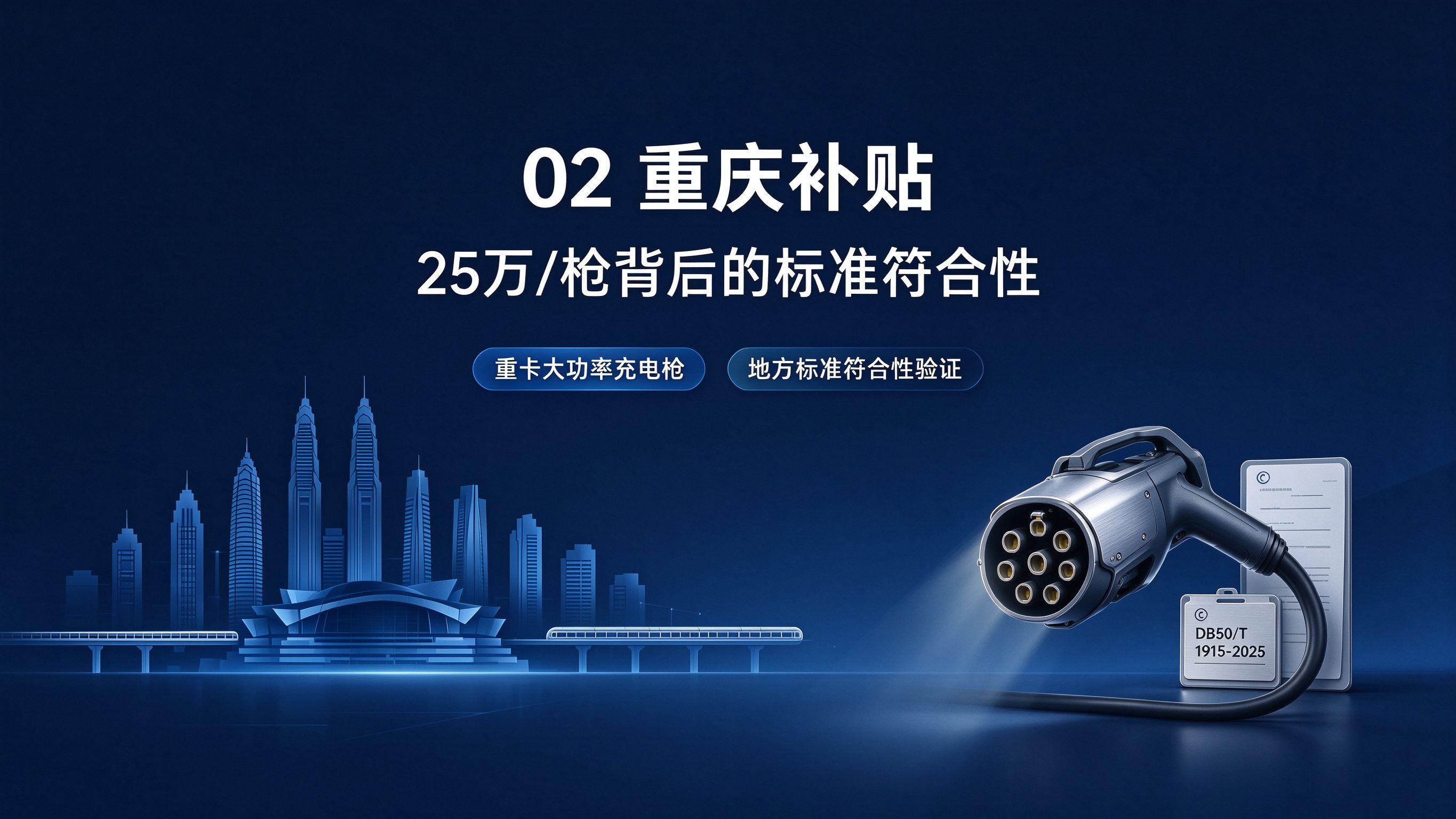
Chongqing offers more generous subsidies, but its technical requirements are also more specific.
The “Chongqing Municipal Support Policies for the High-Quality Development of Electric Vehicle Charging Infrastructure Services (2026–2028)” covers three major areas: residential ultra-fast charging, fast charging for heavy-duty trucks, and V2G vehicle-to-grid interaction:
- Public ultra-fast charging stations: A one-time subsidy of 30,000 yuan per station;
- High-power charging nozzles for heavy-duty trucks: A one-time subsidy of 250,000 yuan per nozzle, provided they are constructed and put into operation in strict accordance with local standard DB50/T 1915-2025;
- At the same time, a mechanism for gradual annual reductions will be established.
A generous subsidy of 250,000 per unit is bound to be accompanied by strict scrutiny. The disbursement of funds requires third-party verification that the project has been “completed in accordance with standards”—this combination of compliance verification and on-site inspections presents a high-value entry point for compliance services.
In particular, not all companies are familiar with local standards such as DB50/T 1915-2025.If you want to receive the charging subsidy for heavy-duty trucks in Chongqing, you first need to understand the differences between local standards and national regulations. Otherwise, if the facility doesn’t meet the standards after construction, you won’t receive the subsidy and will have to bear the cost of making corrections yourself.
03 "Verifiability"Why This Has Become a Key Issue
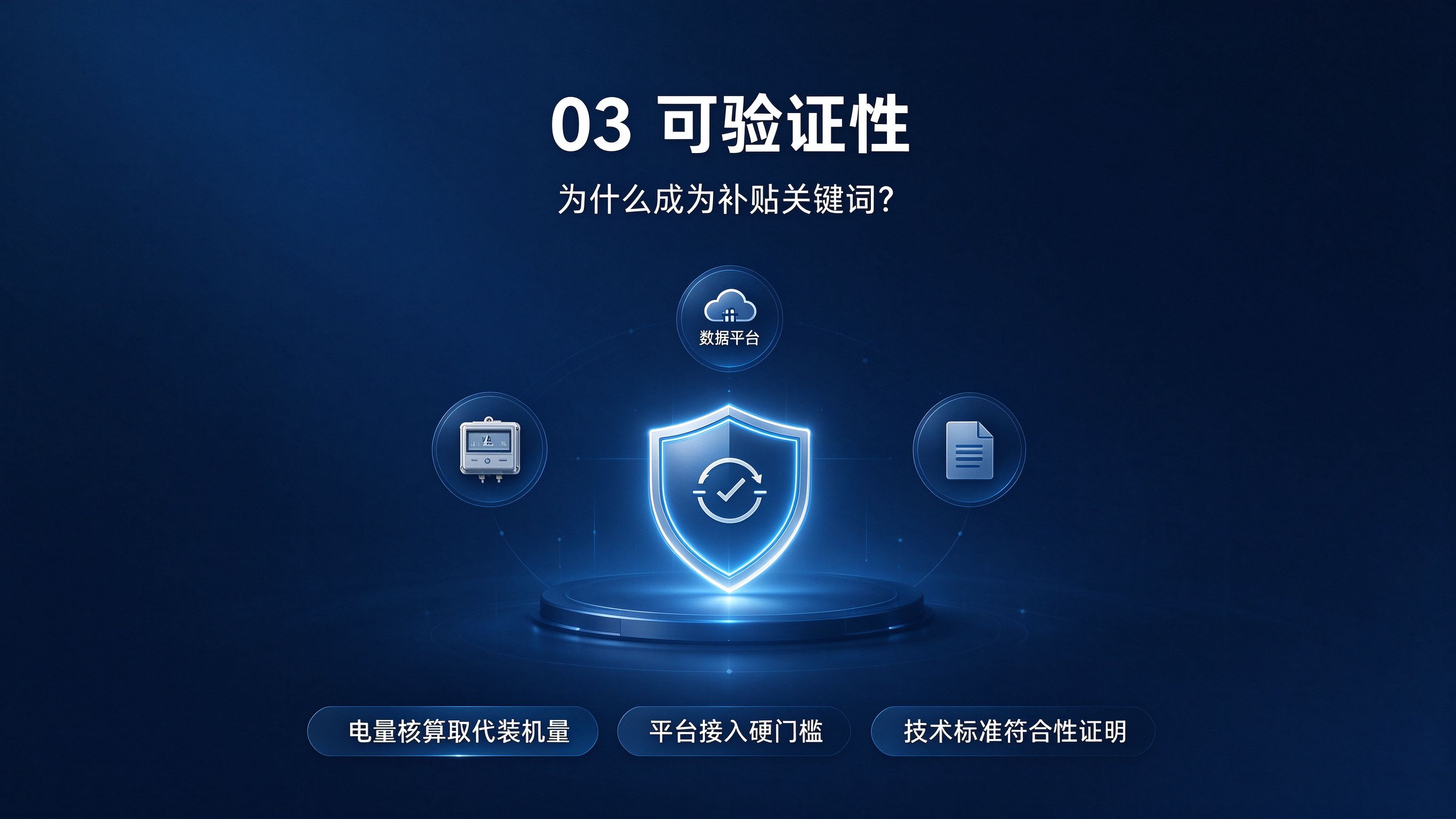
Based on the subsidy criteria in Xiamen and Chongqing, a common logic can be identified:The disbursement of subsidy funds is now contingent upon measurement accuracy and data reliability.
This is specifically reflected in three aspects:
First, electricity consumption is now used as the basis for calculation instead of installed capacity. Subsidies are calculated based on actual charging volume, not the number of charging stations. This requires accurate metering at charging stations—the average monthly charging volume per charging gun must be no less than 200 kWh. It is not sufficient for companies to simply report their own figures; instead, these must be cross-verified against data uploaded to the platform and user payment records.
Second, platform integration has become a mandatory requirement. All subsidies require integration with municipal or provincial regulatory platforms and compliance with information quality standards. The quality of data uploads from devices, communication consistency, and real-time performance directly impact subsidy eligibility.
Third, proof of compliance with technical standards. Chongqing explicitly requires construction in accordance with local standards, while Xiamen mandates that charging stations be equipped with electricity metering and smart, orderly charging capabilities. These are not “recommendations” but necessary conditions for subsidy applications.
In other words: Metering accuracy testing, platform data quality verification, and proof of standard compliance are becoming the technical prerequisites for subsidy applications.
04 What Companies Should Check Before Applying for Subsidies
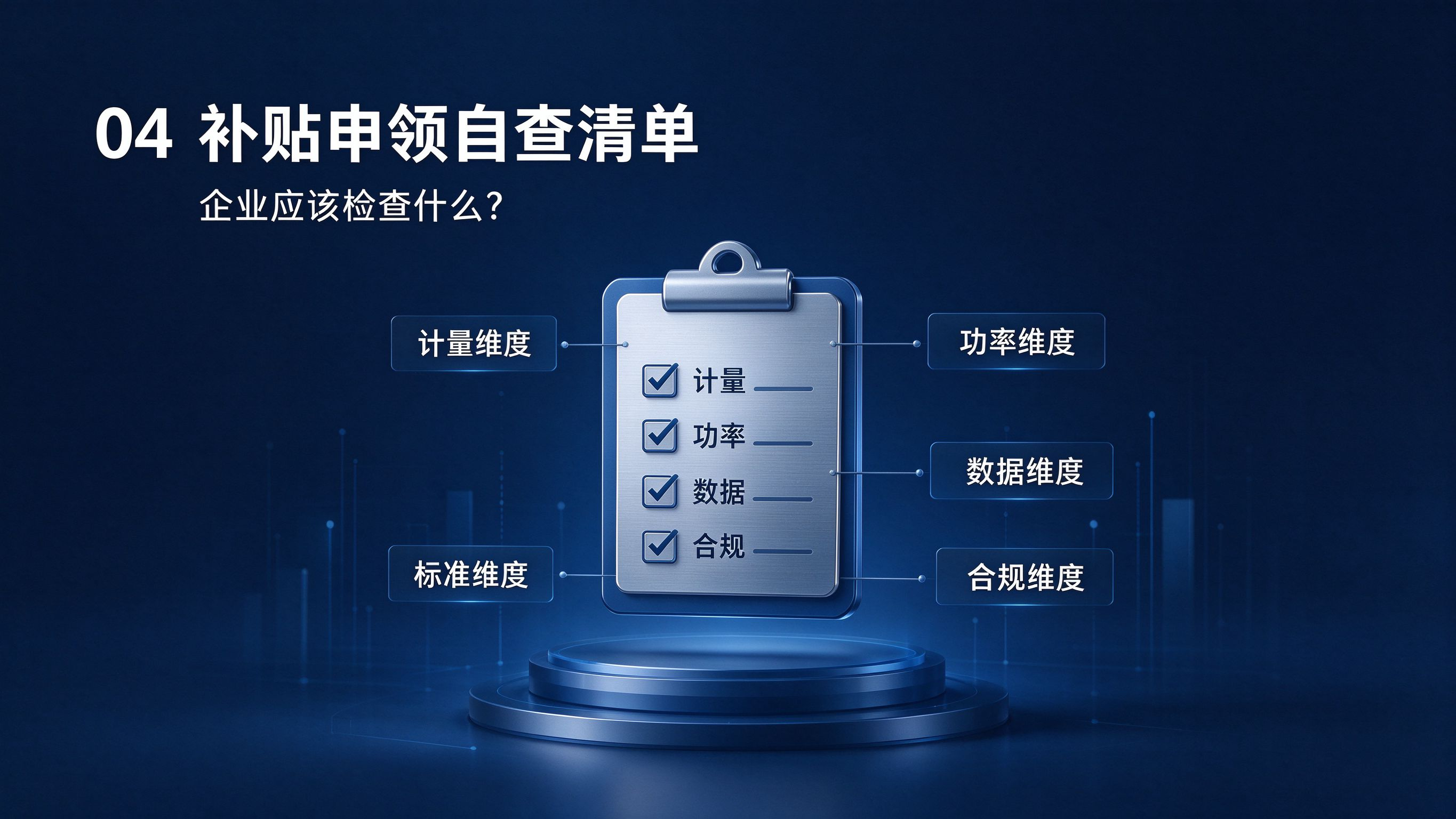
Based on the latest subsidy policies released in September, here is a self-inspection checklist for charging operators:
Metering Aspects: Has the charging station’s electricity meter been verified or calibrated? Is the metering error within the permissible range? Do the electricity consumption data uploaded to the regulatory platform match the local metering data?
Power Aspects: Does the power output per charging gun meet the local subsidy threshold (e.g., Xiamen requires 120 kW or higher, or an average of 80 kW or higher)? Is the power test report still valid?
Data Aspect:Is the equipment connected to the municipal regulatory platform? Do the completeness, accuracy, and real-time performance of the uploaded data meet the standards? Are there any instances of data transmission interruptions, errors, or delays?
Standards Dimension: Does the product comply with the technical standards required for local subsidies (e.g., Chongqing DB50/T 1915-2025)? Is a third-party certificate of compliance with standards required?
Compliance Dimension: Does the company have a record of major safety incidents or administrative penalties? CCC Are certifications and mandatory verifications still valid?
Failure to meet any one of these five criteria may result in the subsidy application being rejected.
05 Long-Term Trends in Subsidy Policies
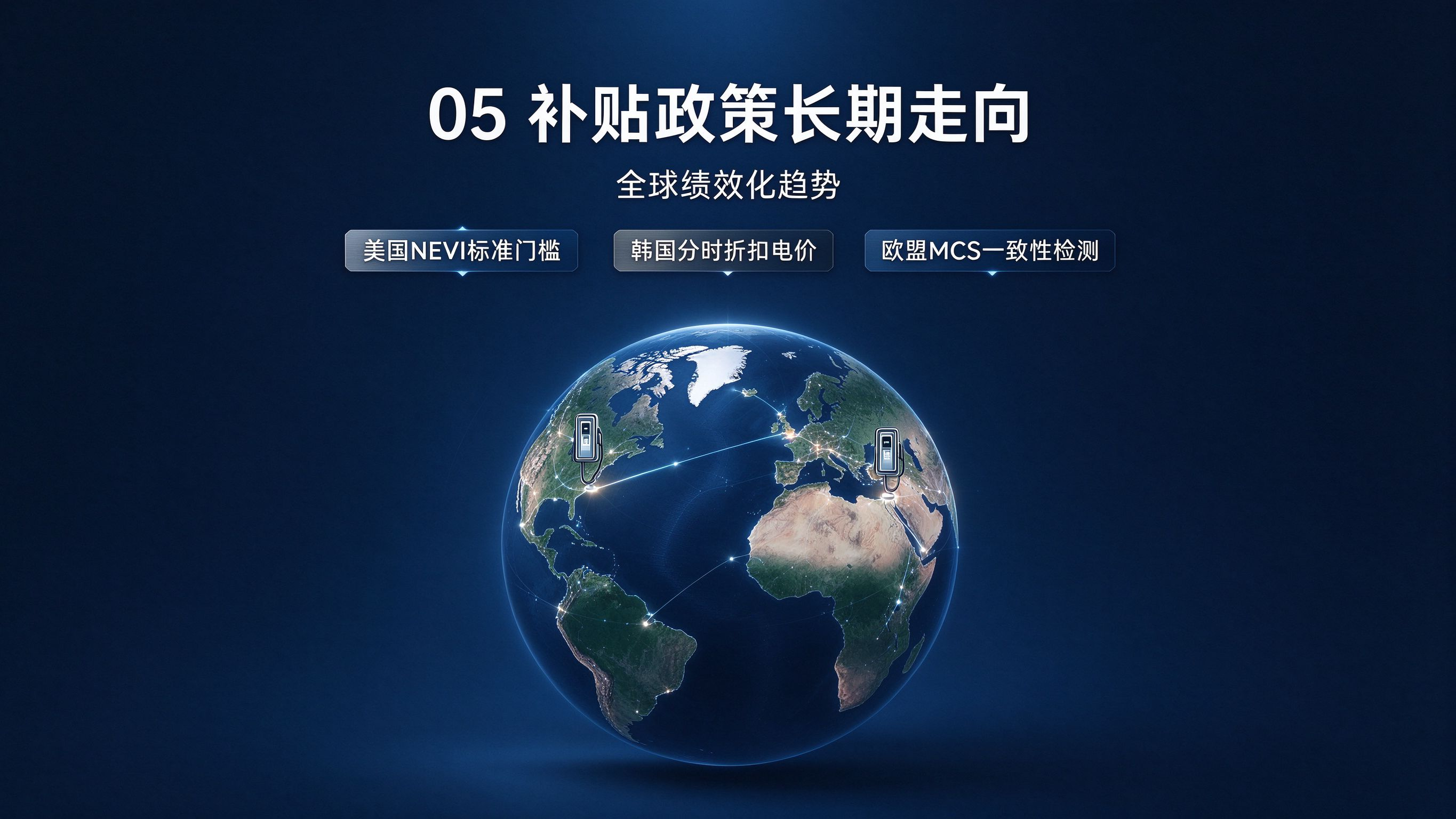
Not just domestically. Judging from global developments in September, the “performance-based” approach to subsidies is a widespread trend:
- State-level NEVI funding in the U.S. generally uses technical standards (power output, availability, payment, and data reporting) as implicit thresholds and requires ongoing availability rate reporting after the stations become operational;
- South Korea has implemented time-of-use discounted electricity rates, offering up to a 32% discount on daytime charging fees on weekends and public holidays—this directly depends on the accuracy of the built-in clocks in charging stations; without precise metering, discounts cannot be correctly applied;
- EU funding explicitly prioritizes charging infrastructure for electric trucks and buses; demand for MCS compliance, high-power EMC, grid connection, and MID metering testing will surge within 12–24 months.
The world is moving in the same direction: subsidies are no longer simply “handing out money,” but rather “paying for results.”
For companies, this means that compliance capabilities and testing and certification capabilities are shifting from "cost centers" to"Revenue Center"—Because it directly determines whether you’ll receive subsidies and how much you’ll receive.
Suzhou Arnool Testing and Certification Continuously tracks global regulatory and policy developments regarding charging stations, providing charging station manufacturers, charging operators, and companies expanding overseas with CCC certification , mandatory verification, CE / UKCA certification, UL /NRTL certification, metrological calibration, platform data verification, and other end-to-end compliance services. If you need to assess whether your products meet the latest subsidy application requirements, please feel free to contact us.