

01 What exactly is V2G, and how is it different from regular charging?
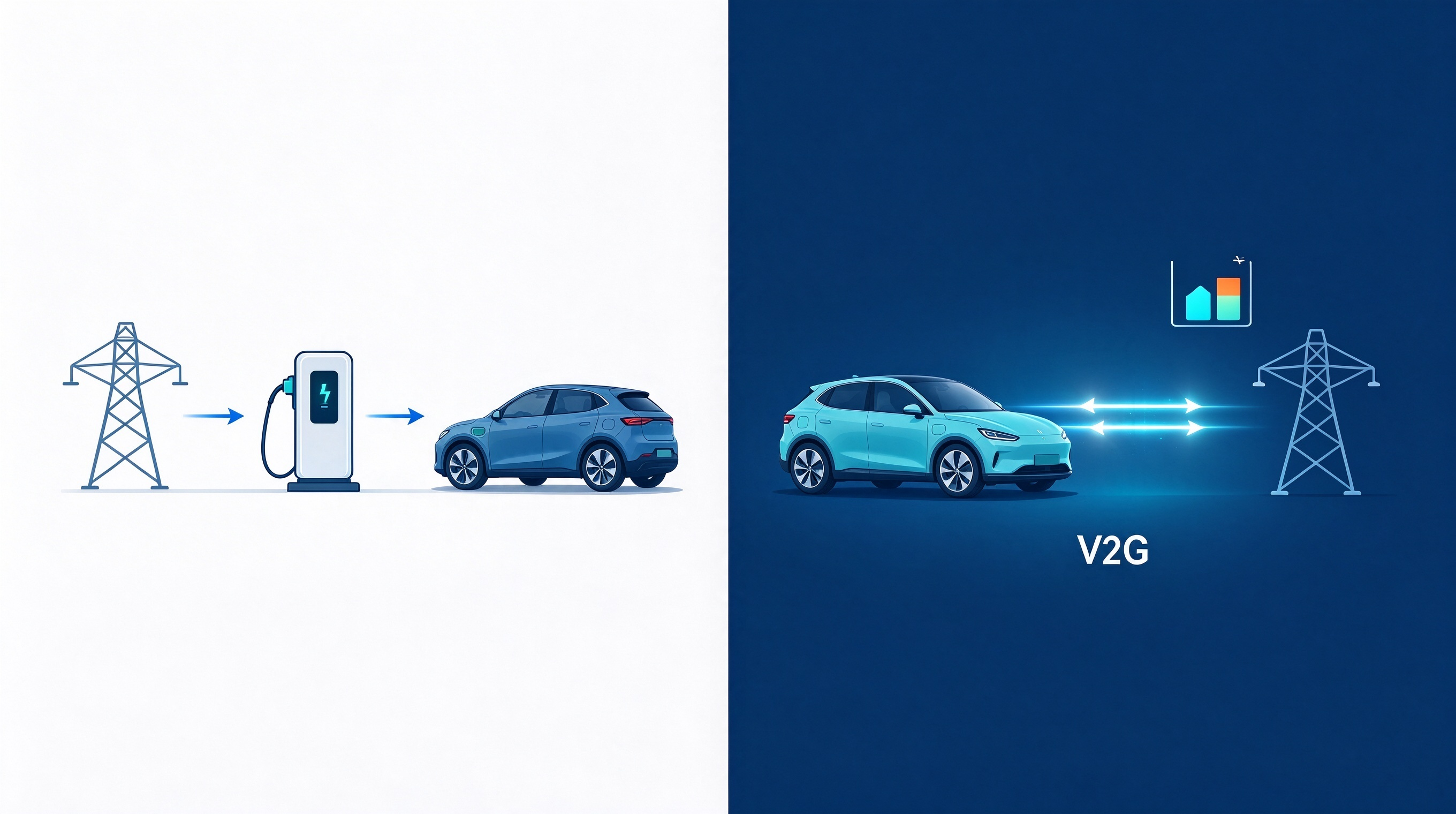
Let’s clarify the concept first.
A regular charging station is one-way: power grid → charging station → electric vehicle; the vehicle simply draws power. V2G (Vehicle-to-Grid, V2G) is bidirectional: electricity can flow between the grid and the vehicle—the vehicle can charge during off-peak hours and feed electricity back into the grid during peak hours, allowing owners to profit from the difference in off-peak and peak electricity rates.
This sounds ideal, but bidirectional charging places entirely different demands on the equipment. It must not only be able to “charge,” but also “discharge, feed into the grid, and ensure safety and controllability.” The technical dimensions involved include: bidirectional power converters, grid-connection protection, communication protocols, power quality, and safety isolation—each of which requires corresponding standards and testing methods.
Previously V2G, pilot projects have been conducted in various countries, but there has never been a comprehensive path for third-party certification. Once a product is developed, how can its safety and compliance be proven? Without standards to follow, the market is reluctant to pursue large-scale commercialization.
02 What is the V2G certification pathway?
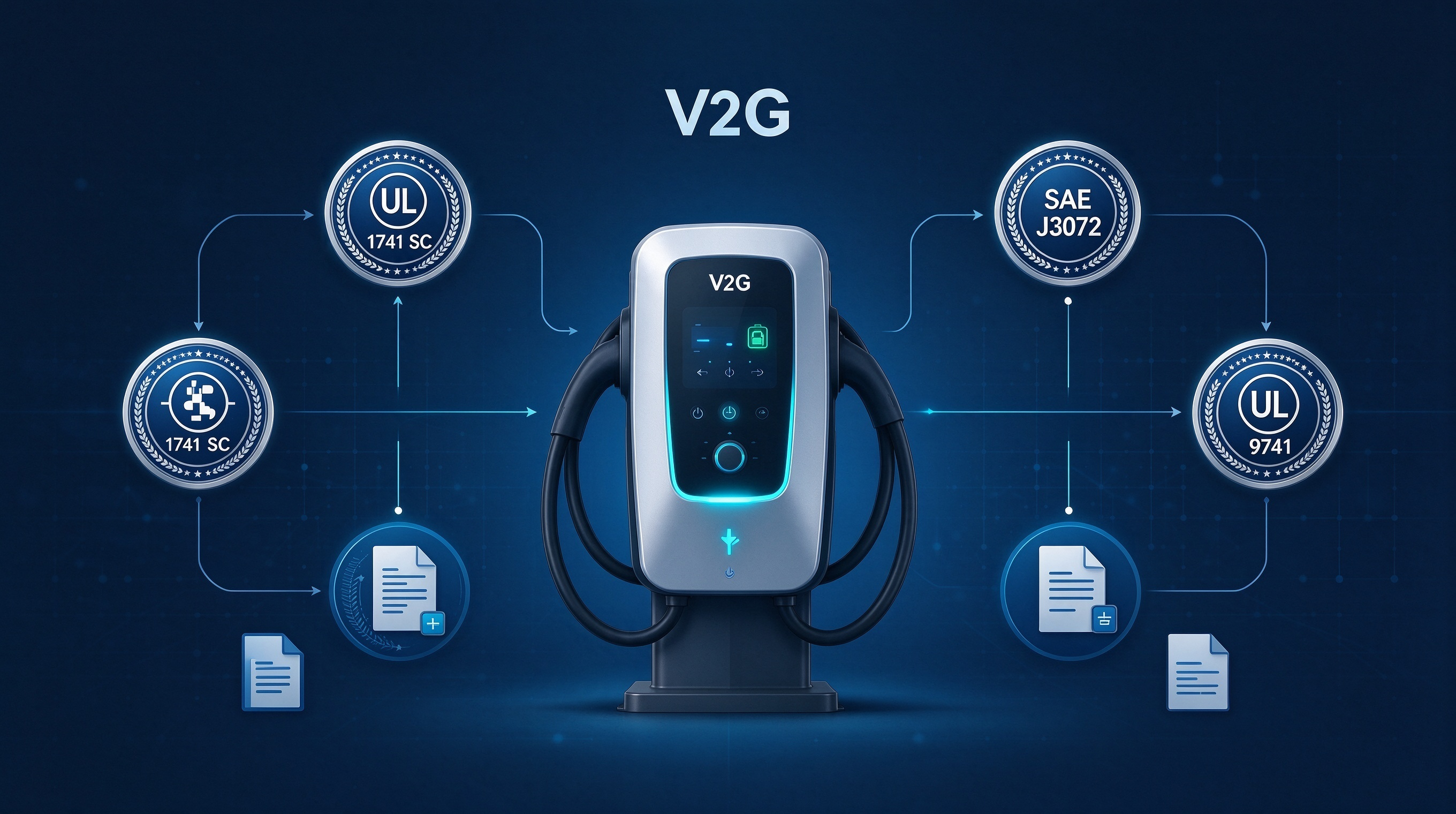
The V2G certification program mainly follows the UL 1741 Supplement SC path.
UL 1741 was originally a safety standard for “Distributed Energy Inverters, Converters, Controllers, and Grid-Connected System Equipment”; Supplement SC is a recently released addendum specifically addressing bidirectional charging equipment. The corresponding standard for the vehicle side is SAE J3072 (vehicle-mounted bidirectional inverters).
An alternative path is available to obtain grid-connection certification and performance support in accordance with the new UL 1741 requirements for multi-piece distributed energy resources (DER), in conjunction with UL 9741 “Electric Vehicle Power Export Equipment (EVPE).”
03 Why is “ limited capacity ” the most significant business indicator?
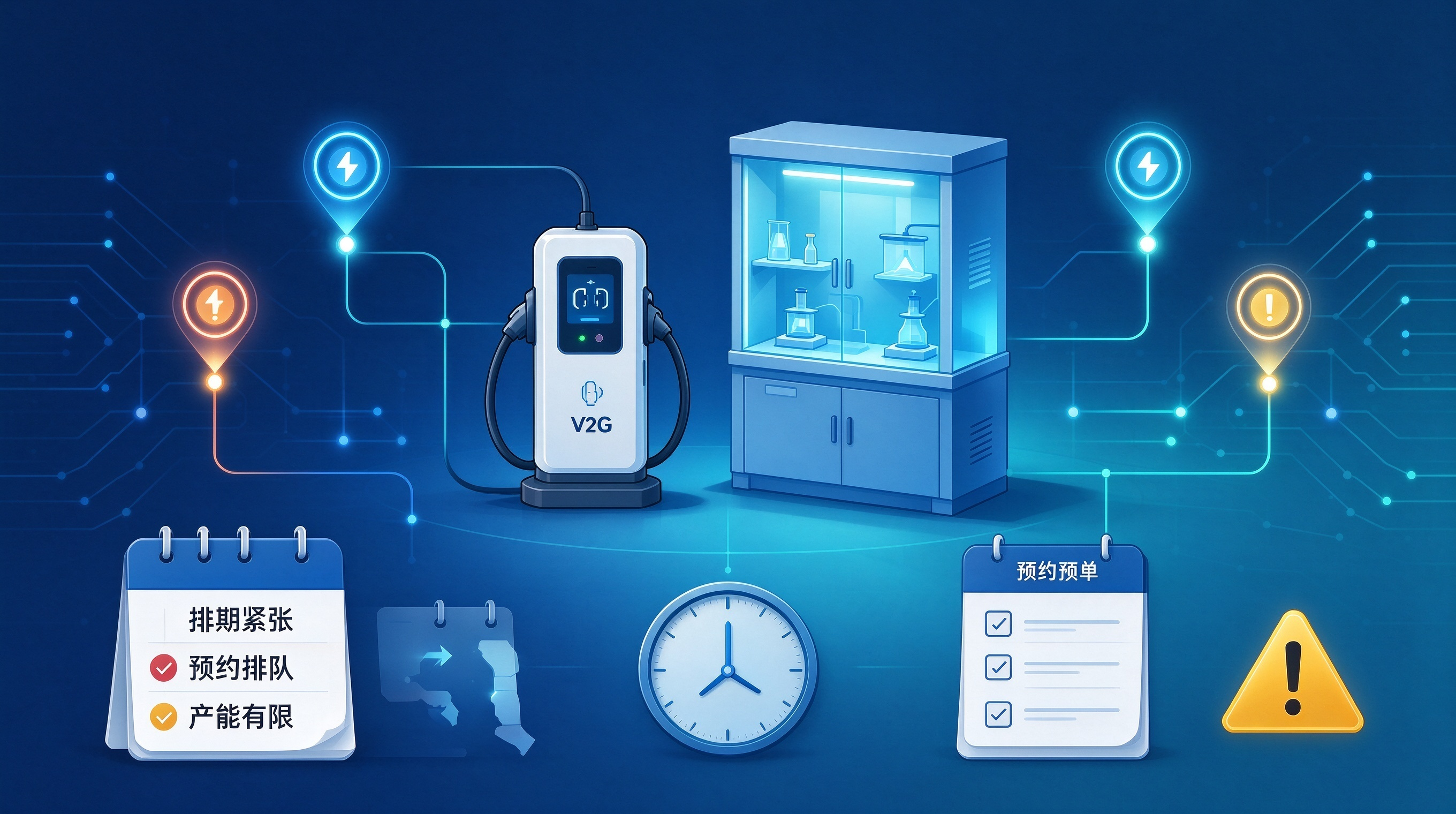
- Globally, V2G third-party certification capacity is concentrated in two locations. This means:
- For manufacturers, V2G certification wait times can be long, so booking in advance is essential to capture the U.S. market;
- For testing laboratories, V2G testing capacity is a scarce resource; those who establish it first will gain cross-regional pricing power;
- For domestic companies, focusing on the development of UL 1741 Supplement SC and UL 9741 is a prerequisite for entering the U.S. V2G market.
04 What is the relationship between V2G and energy storage PCS certification?
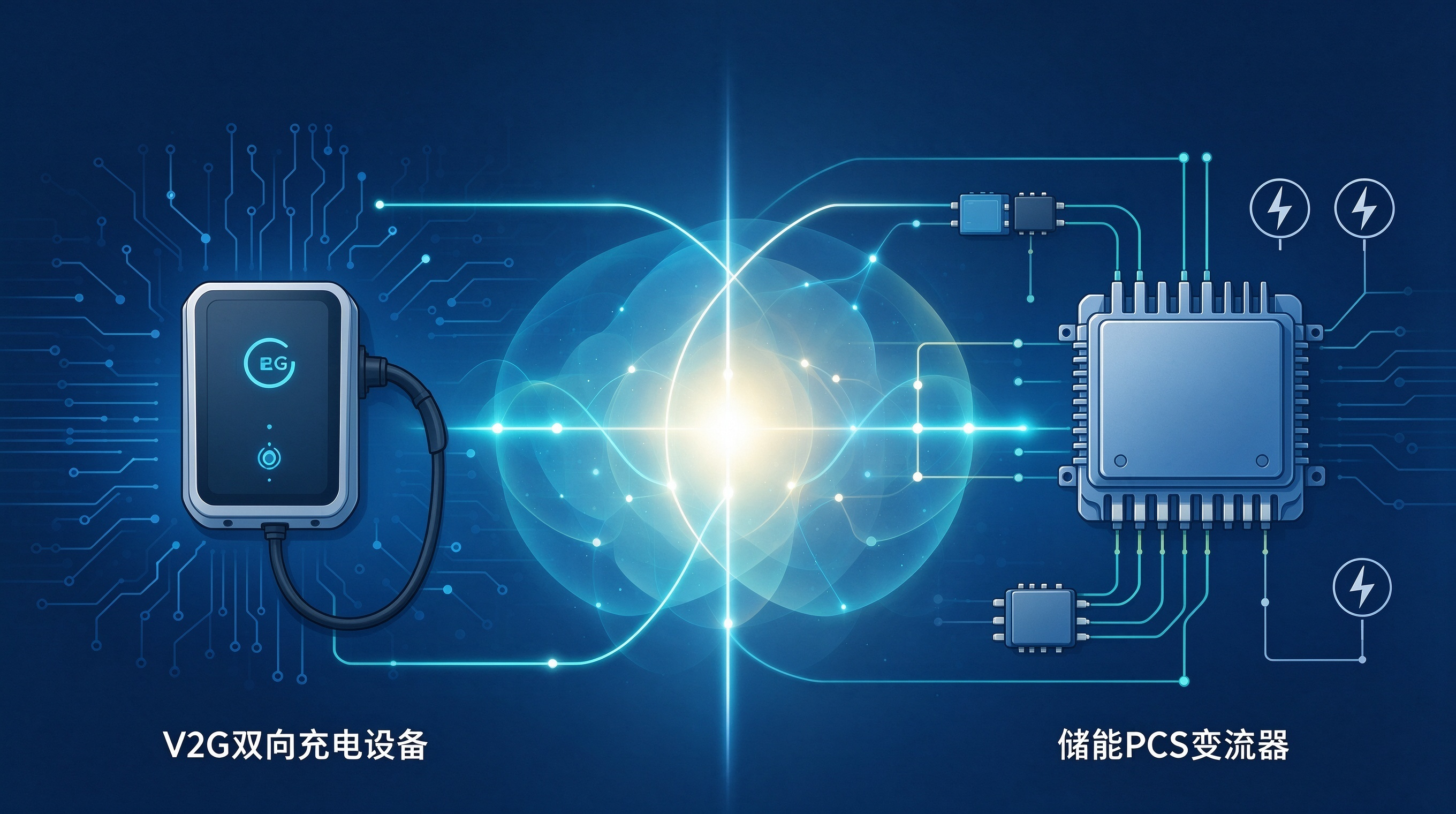
Many people may not realize that: V2G testing capabilities are highly reusable for grid-connected certification of energy storage power converters (PCS).
At the heart of bidirectional charging equipment is a bidirectional power converter, which must meet grid-side requirements during charging mode as well as grid protection, power quality, and anti-islanding requirements during reverse power flow. These testing methods, equipment configurations, and safety standards overlap significantly with those for energy storage PCS grid-connection certification.
In other words: if your organization is already conducting grid-connection certification for energy storage PCS, the marginal cost of expanding into the V2G direction is not high; the key is to supplement the testing capabilities for vehicle-side protocols (SAE J3072) and the V2G-specific supplement (UL 1741 Supplement SC).
If you are a manufacturer of new energy vehicles or charging stations, you can also evaluate your testing partner from this perspective: whether they have experience with PCS grid-connection testing will determine their ability to quickly handle your V2G certification needs.
05 Arnool : V2G -Related European and U.S. Certifications
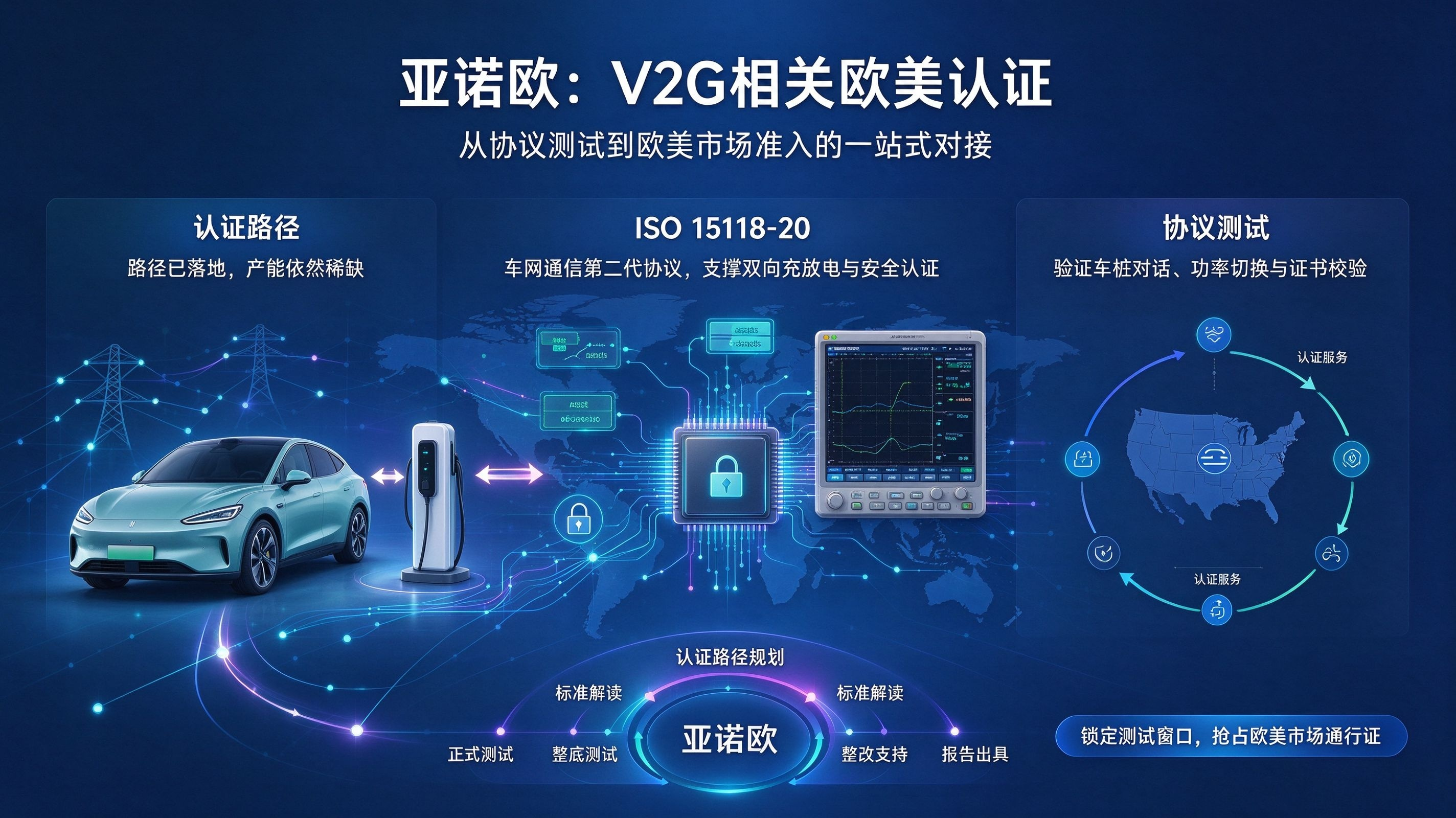
The previous section outlined the V2G certification pathway and capacity landscape: the pathway has been established, but capacity remains scarce. For domestic new energy vehicle manufacturers, charging station operators, and energy storage companies, there is only one critical next step: finding a testing and certification body capable of handling V2G-related European and U.S. certifications.
Based on years of experience and accumulated capabilities in testing and certification, Arnool can conduct V2GRelated European and U.S. certification services, including ISO 15118-20 protocol testing.
ISO 15118-20 is the second-generation protocol standard for vehicle-to-network communication, officially released in 2022. It standardizes the communication process between electric vehicles and charging stations (EVSE), covering key aspects such as the establishment and termination of the charging process, smart charging scheduling, bidirectional charging and discharging (V2G), Plug & Charge), and the TLS 1.3 security mechanism. It also serves as the foundational communication protocol widely adopted for commercial use and certification of V2G in Europe and the United States.
For vehicle and charging station manufacturers, the significance of protocol testing goes beyond simply obtaining a report. It verifies whether the vehicle and charging station can “communicate” under real-world conditions: whether the charging process can be established correctly, whether bidirectional power can be switched safely, and whether security certificates can be reliably verified. These protocol-level issues are often most easily exposed in a laboratory setting and should be resolved before the product is finalized.
Regarding V2G -related certifications in Europe and the United States, Arnool provides one-stop services: From initial certification path planning and standards interpretation, to preliminary testing and remediation support, through to formal testing and report issuance, we form a complete closed-loop process of “testing + certification + remediation + training.” Whether it’s the grid-connection certification pathways focused on by the U.S. market—such as UL 1741 Supplement SC grid-connection certification pathways—which are of particular interest to the U.S. market—or the ISO 15118-20 communication protocol testing required by the European market, all can be coordinated through a single point of contact at Arnool.
If your team is planning a V2G product or is ready to begin certification for overseas markets, we recommend discussing certification plans and testing schedules with us as early as possible. In markets where certification capacity is scarce, teams that secure a testing slot first are more likely to obtain the “pass” to enter the European and American markets.
In our final post, we’ll return to the domestic market: subsidy policies are shifting from “ Paying for Installed Capacity ” toward “ funding based on verifiable performance ”. Will your charging station still be eligible for subsidies?