

In September 2026, the China National Certification and Accreditation Administration (CNCA) issued the new “Implementation Rules for Compulsory Product Certification—Luminaires (Trial)” (CNCA-C10-01:2026) and “Implementation Rules for Ballasts (Trial)” (CNCA-C10-02:2026) , replacing the 2014 version of the rules that had been in use for many years.
Many companies, upon seeing the words “trial,” assumed this was merely a routine update. However, a careful reading reveals that this is a comprehensive tightening of regulations.
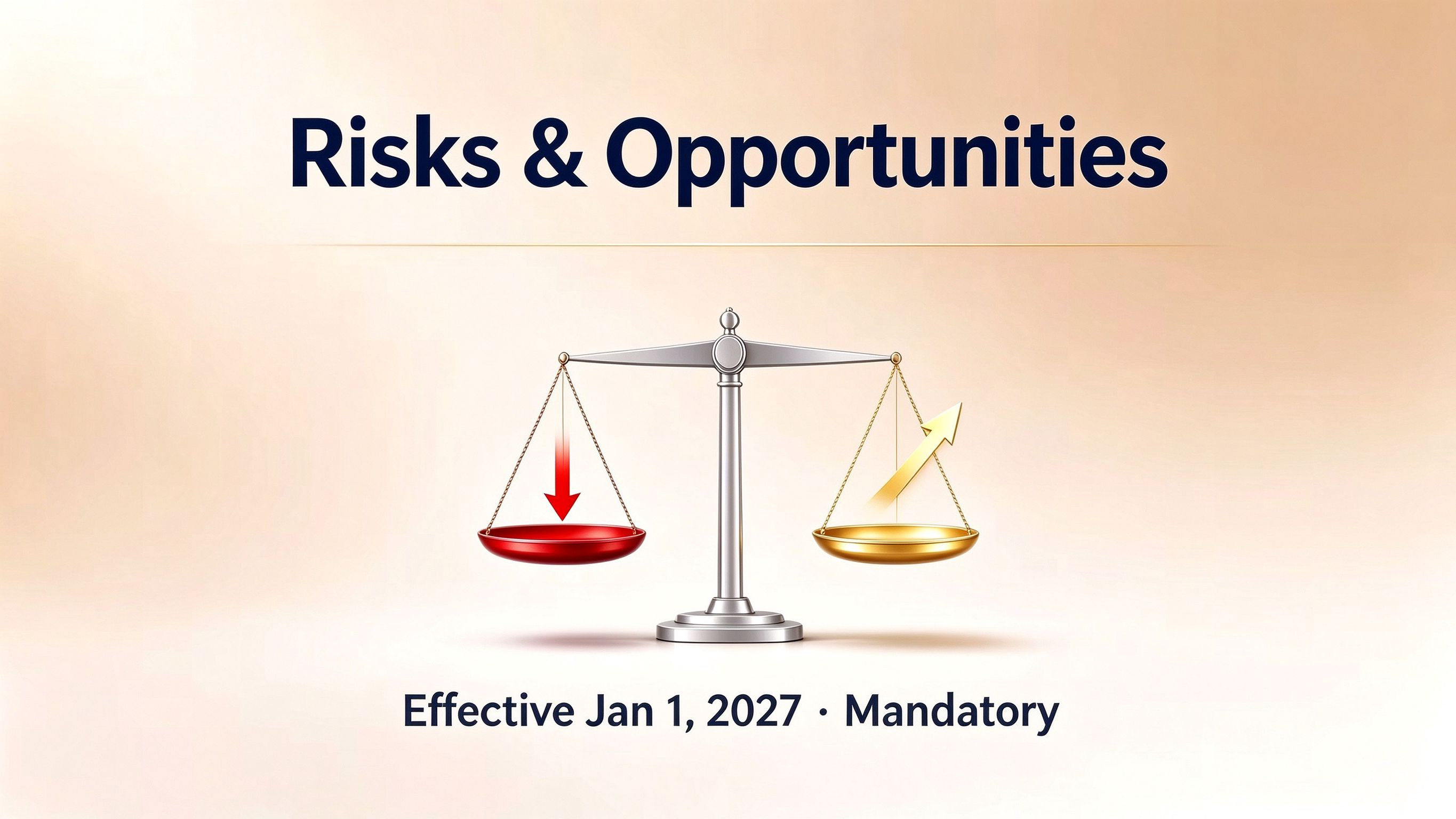
The new regulations will take effect on January 1, 2027. The transition period left for companies is now less than three months.
This time, factory inspections and quality assurance capabilities have been elevated to an unprecedented level.
As a third-party laboratory with deep expertise in lighting testing and certification, we’ve compiled the changes in the new regulations that most directly impact businesses into this article to help you mitigate risks before the inspections take place.
01 First, let’s clarify: What exactly has changed this time?
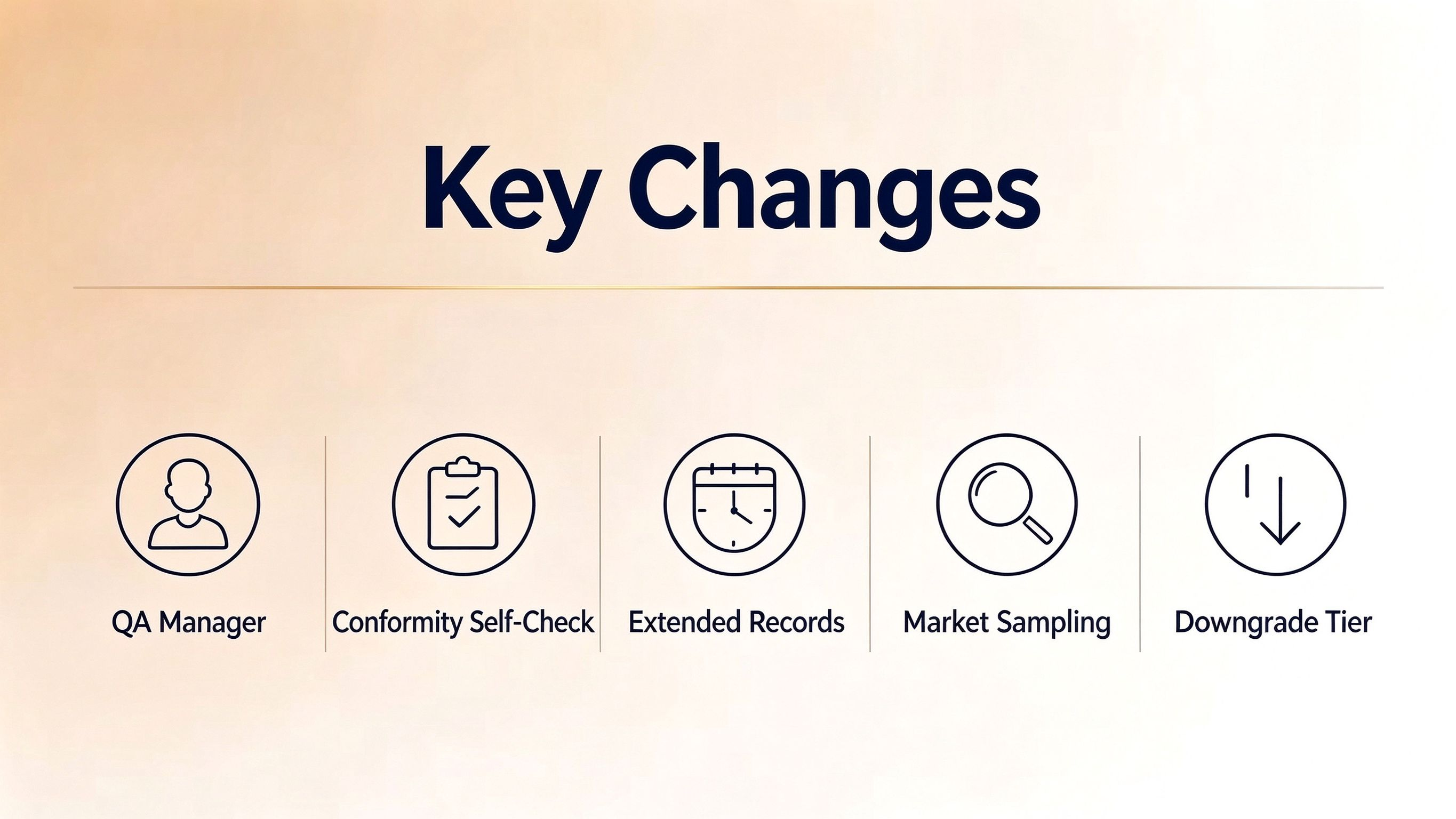
The changes in the new regulations aren’t just a few word tweaks—they’ve completely overhauled the certification process from start to finish. The five points below will have the greatest impact on companies.
1. The certification model has become more refined. Lighting fixtures are now subdivided into general-purpose fixtures, large fixtures, and single-batch custom fixtures, each subject to a distinct certification model for greater specificity; regulations for ballasts have also been established in a separate document.
2. Factory inspection standards are now unified nationwide and have been significantly tightened. Requirements for factory inspections and quality assurance capabilities have been consolidated into the main text and annexes; inspection criteria are now standardized nationwide, and the scope of compliance has been expanded to include certification bodies, laboratories, and inspection personnel.
III. A new role of “Certification Quality Manager” has been introduced. Enterprises must designate a Certification Quality Manager to assume five specific responsibilities. By assigning responsibility to a specific individual, accountability can be traced to a specific person in the event of any lapses.
IV. Institutionalization of product conformity self-inspections. These must be conducted at least twice a year, covering all valid certificates, and signed and stamped by the responsible person for future reference. The era when obtaining certification meant all was well is over.
V. Record retention requirements have been significantly increased. The retention period has been extended from the previous 24 months to a minimum of 5 years for general records and 10 years for critical records. Records management is no longer a minor matter.
02 The Most Underestimated Hurdle: Factory Inspections
While the previous requirements can be addressed gradually, factory inspections are where the real scrutiny begins—and they represent the area with the highest concentration of risks under these new regulations.
- Supervisory sampling has become stricter. For the first time, it is explicitly stated that supervisory sampling must not be conducted at the original type-testing laboratory; sampling from the market and e-commerce channels is prioritized. If samples cannot be obtained, the certificate will be suspended immediately.
- Inspection frequency is linked to enterprise classification. Enterprises applying for certification for the first time are automatically downgraded from Class B to Class C; Class D enterprises may face up to three factory inspections per year, with no prior notice.
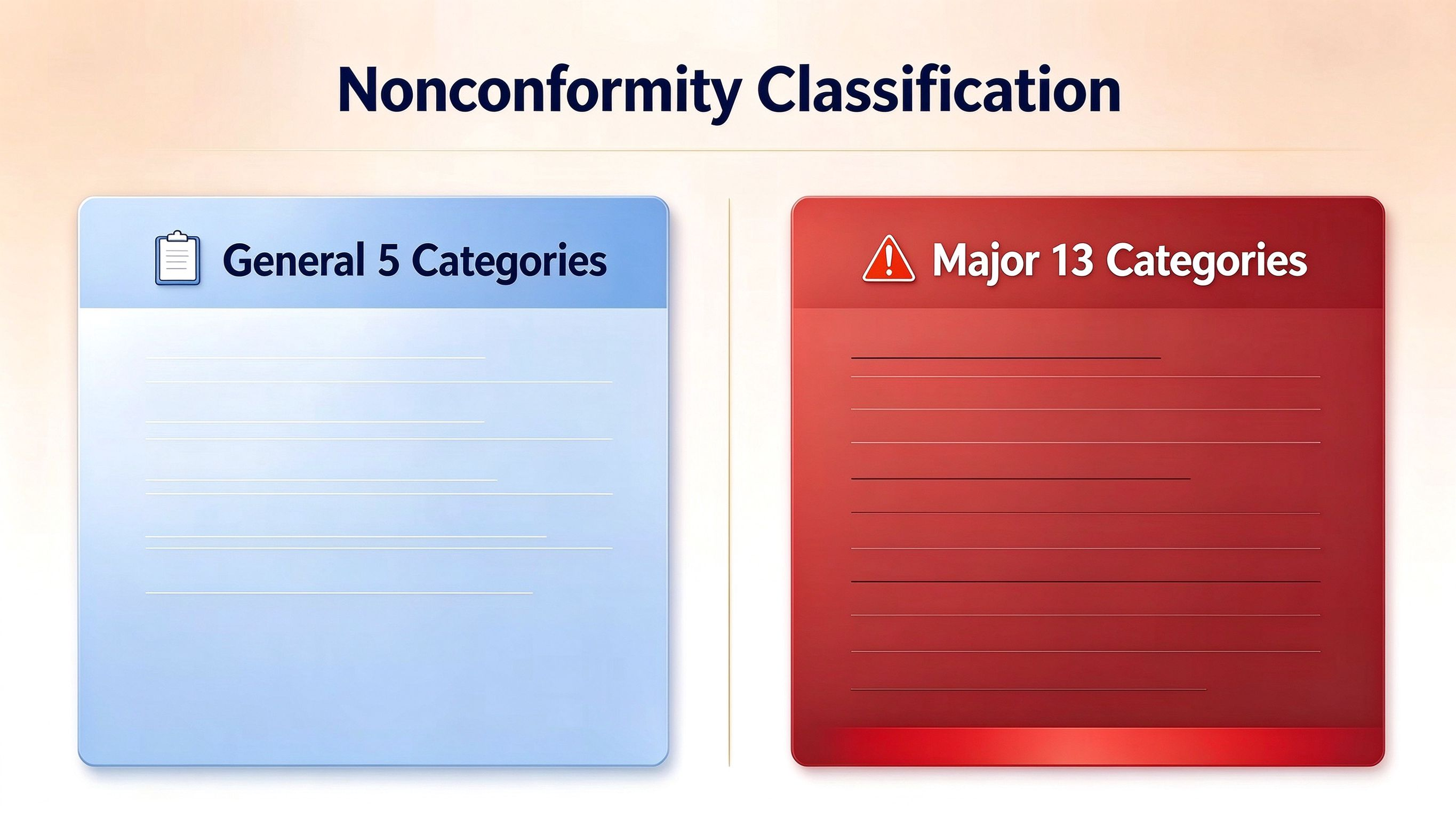
- Nonconformities are listed for the first time. The new regulations define five categories of general nonconformities and 13 categories of serious nonconformities. Once a serious nonconformity is identified, the factory inspection fails immediately.
There are also two entirely new requirements: Top management must attend the opening and closing meetings; otherwise, the inspection will be terminated. Intermediaries are prohibited from participating in inspections; if discovered, the inspection will be halted immediately. The old practice of relying on intermediaries to accompany the audit and submitting supplementary documentation on-site at the last minute has been explicitly prohibited.
03 The combination of new regulations and a standard revision is amplifying risks
It’s not just the rules that are changing. This certification cycle involves a comprehensive, simultaneous transition to the new GB/T 7000 series standards; the combination of rule restructuring and standard updates creates a dual impact.
This means that existing system documentation, type test reports, and key component ledgers all need to be realigned with the new requirements. Companies that fail to upgrade their systems in a timely manner will face the real risk of having their certificates suspended or even revoked.
To summarize the landscape of this round of changes in a single sentence: The bar is being raised, but opportunities are also opening up.
For those who wait and see, failure to upgrade equals certificate suspension or revocation and the accelerated phasing out of outdated production capacity;
For companies that act first, achieving compliance early equals trust from distribution channels and end users, captured market share, quality upgrades driven by the new regulations, and a competitive edge over peers.
Tighter regulations will weed out the wait-and-see players, but the market they leave behind will be open for those who comply first.
04 This is all the time left for companies.
The new regulations take effect on January 1, 2027—less than three months from mandatory implementation. When it comes to compliance, the longer you wait, the higher the costs and risks.
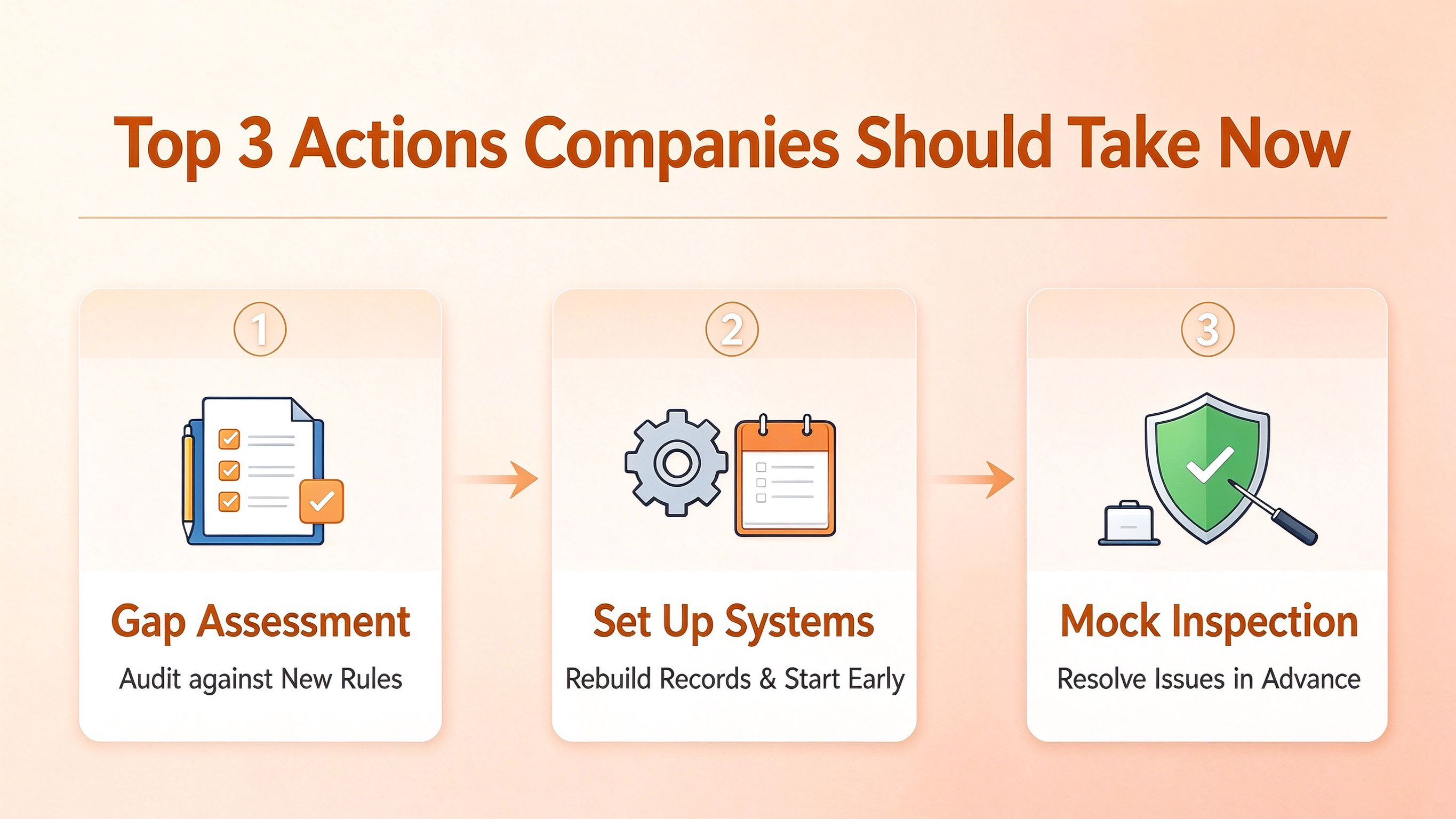
The sooner you align with the standards, the more control you’ll have over obtaining and renewing your certification. There are three key actions companies should take right now:
Step 1: Conduct a gap analysis. Compare your system documentation, quality assurance capabilities, and record-keeping practices against the new regulations, clause by clause, to identify the areas most likely to pose problems.
Step 2: Get the mechanisms up and running. Rebuild your critical component ledgers and implement a system of conducting consistency self-inspections at least twice a year—with signatures from responsible personnel—well in advance, rather than making last-minute corrections right before an audit.
Step 3: Conduct a mock factory inspection in advance.Eliminate the processes most likely to trigger serious nonconformities ahead of time, rather than waiting to address them on-site.
05 We Mitigate Risks Before the Inspection
Suzhou Arnool Testing & Certification Co., Ltd.With long-term experience serving the lighting industry and deep expertise in CCCcertification testing and factory audit coaching, we offer a one-stop solution covering all aspects required for implementing new regulations:
- New regulation dissemination and system documentation revision
- Preparation of self-inspection reports on compliance
- Rebuilding of key component ledgers
- Building inspection capability
- Mock factory inspection with on-site support

We don’t just help you get through inspections—we work with you to solidify your system, turning compliance into a competitive advantage rather than a burden.
The transition period is limited; the sooner you benchmark and implement corrective actions, the more control you’ll have over the certification and recertification process. If you’re currently pursuing CCC certification for lighting fixtures or ballasts, or if your certificate is nearing renewal, please contact us to receive a gap analysis and implementation plan tailored to your company’s specific circumstances.