

In September, UK-based electric vehicle charging station exporters need to pay special attention to a set of data: The UK Office for Product Safety and Standards (OPSS) issued at least three safety notices related to charging products within 30 days, two of which involved the same Chinese brand, ROMADA New Energy. The types of defects were highly similar, and the outcome in both cases was “refusal of entry at the border and destruction.”
This is not an isolated quality fluctuation.The fact that the same brand has been cited twice in a single month indicates that there are systemic issues with its quality control system.
What is even more cause for concern is that the type of deficiency exposed by this case is precisely the kind of task that many export companies assume they have “already done,” but in fact have not done correctly.
01 What exactly went wrong?
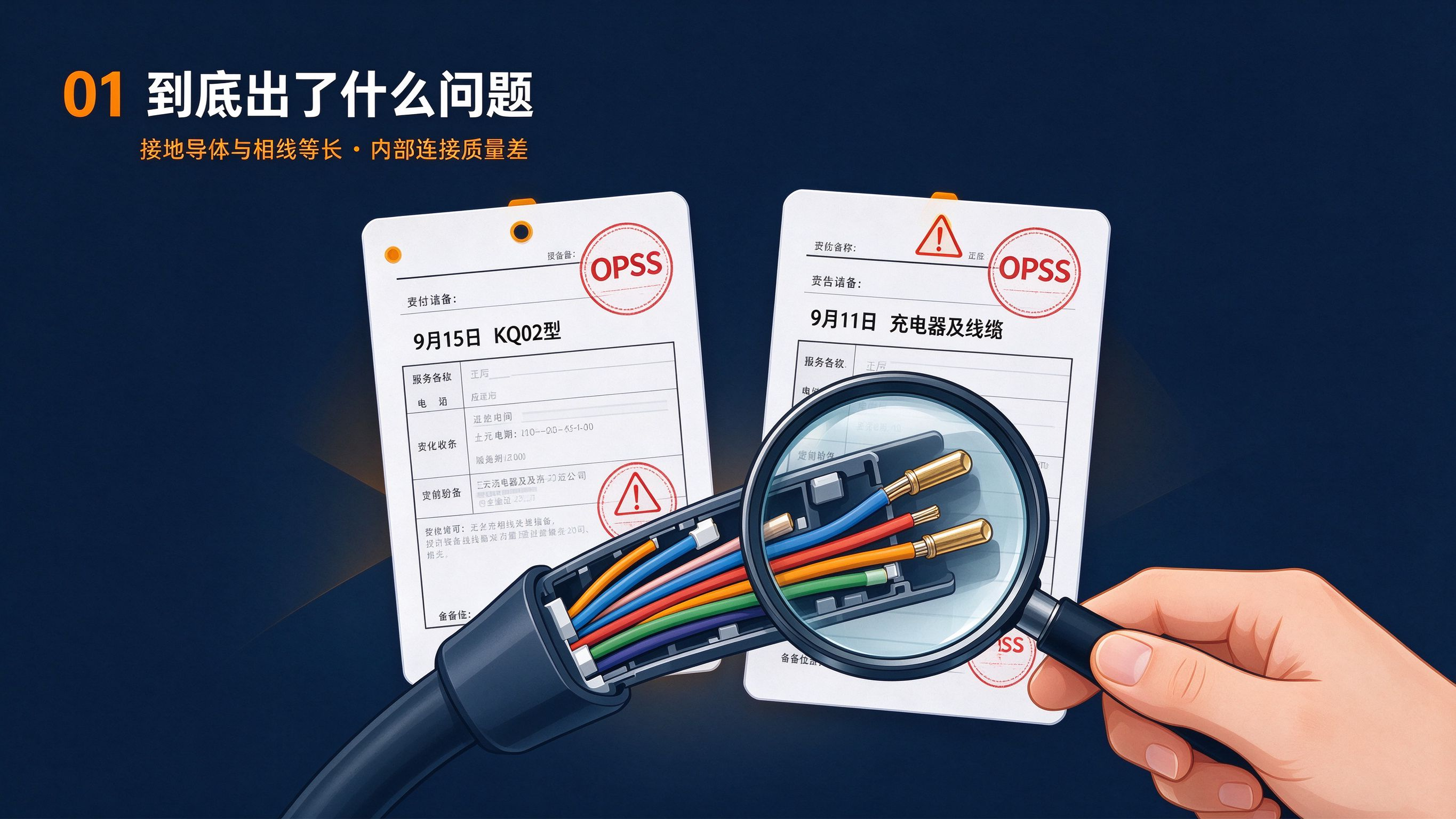
Let’s first look at the specific details of the two reports.
The first case (9Month15(Day):ROMADA New EnergyCharging StationKQ02Type
OPSS has determined that this product poses a serious risk of electric shock: the grounding conductor in the output cable is the same length as the phase and neutral conductors. In the event of a cable pull or a drive-off incident, the protective grounding conductor may disconnect before the live conductors, causing accessible metal parts to lose effective grounding while still energized. The product also failed the earth bond test.
The report also determined that the product did not comply with the 2017 Radio Equipment Regulations. Disposition: The product was refused entry at the border and destroyed, and it has been removed from the e-commerce platform.
The second case (9Month11(Day):ROMADA New EnergyChargers and Cables (2609-0023))
The report concluded that the charger and cable posed a serious risk of electric shock due to poor internal connections. The disposition was also to refuse entry at the border and destroy the items.
Two reports, the same brand, and the defects both point toReliability of Electrical Connections and Grounding..
02 Why"Ground Continuity"It's so easy for problems to arise
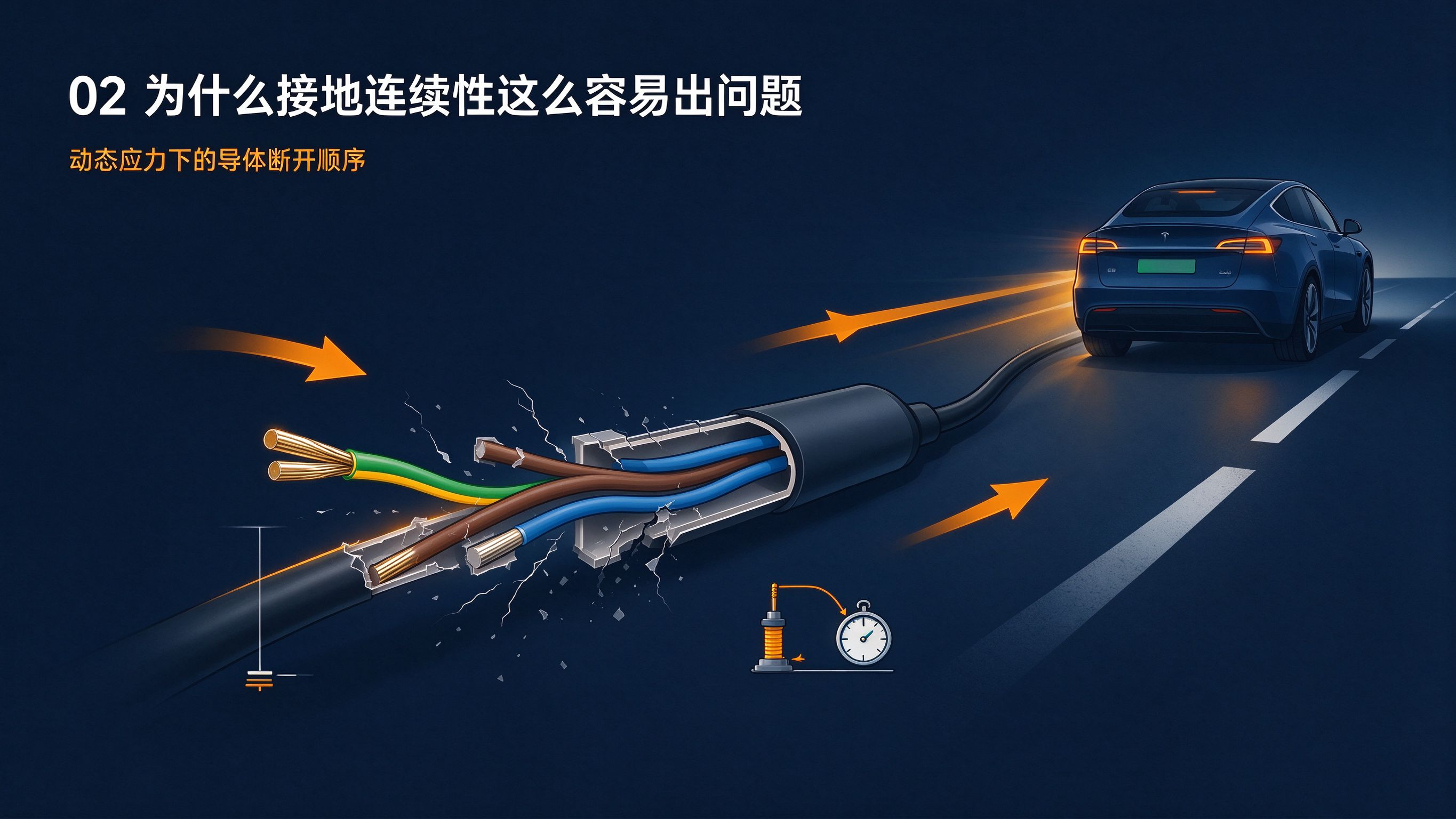
On the surface, grounding continuity testing is a standard inspection item for charging stations, and virtually every certification body performs it. However, the failure mechanisms identified in the OPSS bulletin reveal a structural risk that is often overlooked:
Design of the length of the protective grounding conductor and the sequence of conductor failure under stress conditions.
What does that mean? Conventional ground continuity testing typically involves checking whether the resistance meets specifications under static conditions. However, OPSS focuses on whether the grounding conductor will disconnect before the live conductor does when the cable is subjected to dynamic stresses such as pulling, bending, or the vehicle driving away.
If the grounding conductor and the phase conductor are the same length, they may be subjected to force simultaneously when under load; if, on the other hand, the grounding conductor is shorter, it will break first—at which point the metal enclosure will already be energized, but the grounding will have failed.
This is a structural safety defect that should be reviewed during the design phase—one that cannot be fully addressed by random factory inspections. Even if routine spot checks show that the grounding resistance meets specifications, they cannot guarantee the safety of the sequence of disconnections under stress conditions.
03 What Exporting Companies Should Do Now
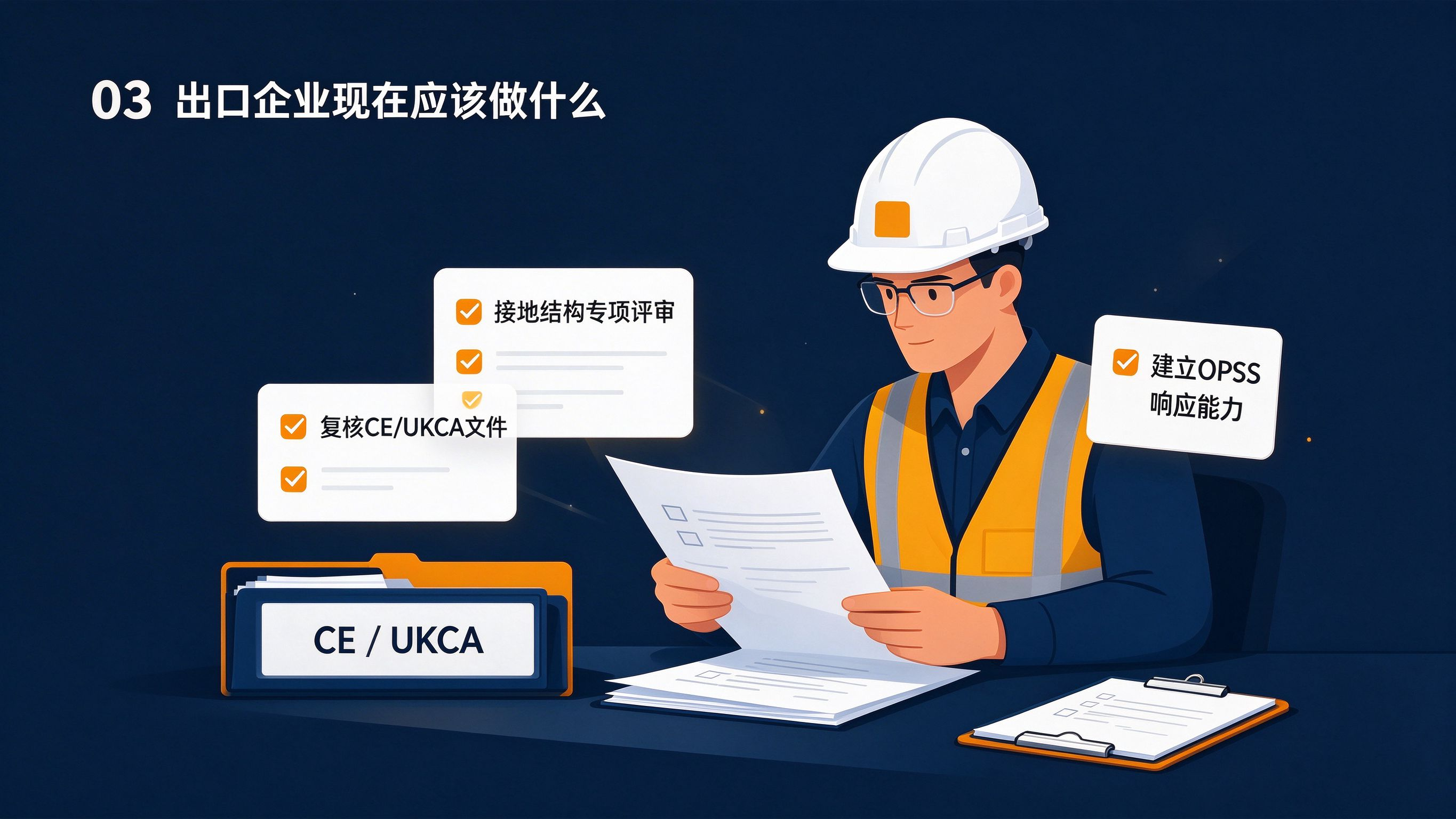
The OPSS bulletin is not just news; it is a failure case that can be directly applied. For charging station manufacturers planning to export to the UK or the EU, we recommend taking three immediate actions:
First, conduct a specialized review of the protective grounding conductor design. During the design review phase, do not merely measure static grounding resistance; also evaluate the sequence of conductor disconnection under stress conditions such as pulling, bending, and drive-off. The protective grounding conductor should be designed to be the “last to disconnect”—that is, the grounding connection must remain effective even after the live conductors have been disconnected.
Second, review CE/ UKCA compliance documentation. The OPSS notification also mentions non-compliance with the “2017 Radio Equipment Regulations,” indicating that compliance with electromagnetic compatibility (EMC) and the Radio Equipment Directive (RED) are also key review areas. Exporting companies should confirm that the CE/UKCA technical documentation includes not only a Declaration of Conformity for the Low Voltage Directive (LVD) but also covers the relevant requirements of the Radio Equipment Directive (RED).
Third, establish the capacity to respond to OPSS notifications. If your product is notified, OPSS will require the manufacturer to submit evidence of corrective action. Be prepared in advance with: design change records, supplementary test reports, proof of supply chain corrective actions, and plans for product removal from e-commerce platforms and recalls. Reacting passively versus responding proactively can lead to completely different outcomes.
04 A Comparative Case Study: How to Handle Low-Risk Products
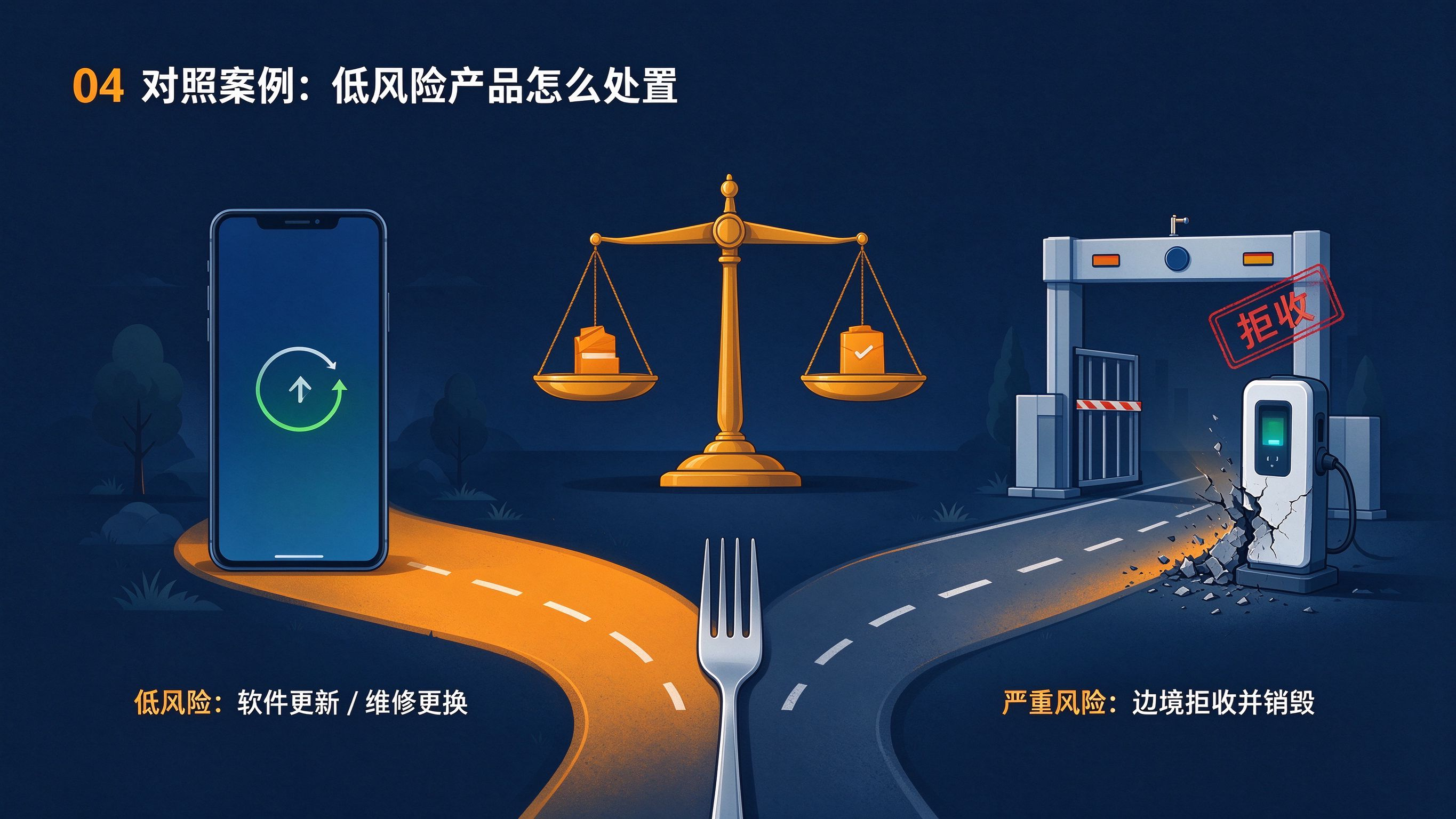
On September 2, OPSS also issued a notification regarding the Wallbox Pulsar Max UK electric vehicle charging station (2608-0025), determining that a manufacturing defect affecting the internal output terminals posed a low fire risk. The recommended course of action was for the company to proactively contact users to resolve the issue through a software update and, if necessary, provide repairs or replacements.
Comparing these two cases reveals that OPSS adopted differentiated measures following risk classification—low-risk cases were addressed through software updates or repairs, while high-risk cases were directly rejected at the border and destroyed. This means that risk classification and recall decision support have intrinsic value in their own right —it is not enough to simply issue a “pass/fail” report.
The threshold for export compliance is shifting from “obtaining certification” to “full lifecycle risk management.”
In the next article, we’ll shift our perspective: As the world bets on V2G vehicle-to-network interaction, UL has just launched its first complete certification pathway—what does this mean for the testing industry and new energy vehicle manufacturers?