


As we enter the second half of 2026—the peak season for foreign trade shipments—the EU and the U.S. continue to tighten market regulation of electrical products. Several core safety standards have entered their mandatory enforcement period, and compliance requirements for popular product categories such as EV charger, industrial electrical equipment, and power supplies have been explicitly updated.
As a professional safety testing laboratory with deep local expertise in electrical export testing in Suzhou, Arnool has promptly compiled the latest regulatory updates and enforcement priorities to help you proactively mitigate compliance risks and ensure your goods are exported smoothly.
/// EU CE Certification: New Standards Now Mandatory; Regulatory Authorities Strictly Scrutinizing Technical Documentation

Core Safety Standards Have Been Updated; Old Reports Will Soon Be Invalid
In the second half of the year, several core standards under the Low Voltage Directive (LVD) will officially become mandatory. CE reports issued under the old standards will no longer be recognized by EU customs and market regulatory authorities:
EN 62368-1:2023+A1:2025: General safety standard for audio-visual, information technology, and telecommunications equipment; the transition period ends on December 31, 2026. The new version strengthens requirements for battery safety, assessable energy, and fire protection; existing products must undergo testing to comply with the updated standard as soon as possible.
EN 61851-23:2023+A1:2024: Safety standard specific to DC electric vehicles EV charger, officially mandatory as of July 2026. The new version adds test items such as safety protection for bidirectional charging and discharging (V2G), mechanical life cycles of charging interfaces, and fault tolerance under abnormal operating conditions. These are key compliance priorities for EV charger vehicles exported to the EU in the near term.
Market Supervision Enforcement Priorities Clarified
The EU Market Surveillance Authority (SMS) has announced its random inspection priorities for the second half of 2026; three types of issues will be the primary causes of goods being held:
CE Non-compliant labeling and product nameplates: Missing manufacturer information, incorrect standard numbers, and non-compliant label placement; missing Technical Construction Files (TCF): lack of corresponding version risk assessment reports, test reports, and product conformity statements; false IP rating claims for outdoor electrical products: on-site protection rating re-verification will be conducted for outdoor EV charger and industrial power distribution equipment
/// U.S. Market: UL Certification Verification Tightened; NEC 2026 Edition Takes Effect
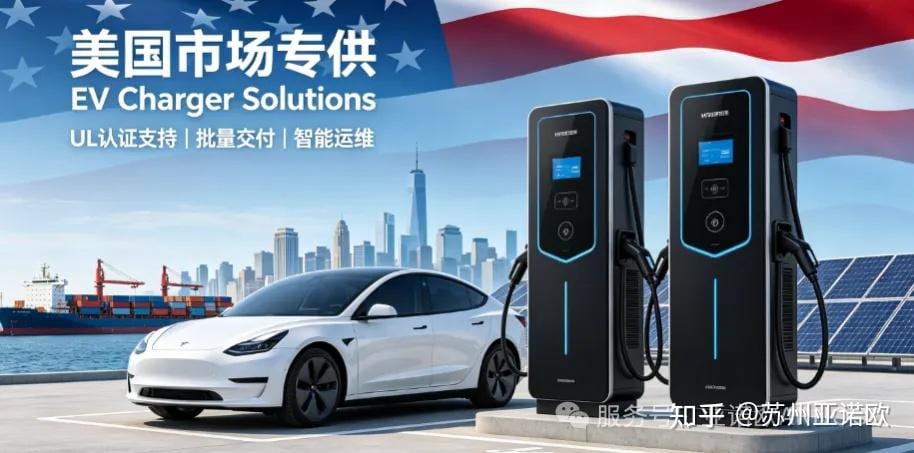
CPSC and Customs Jointly Crack Down on UL Certification Authenticity
Since 2026, the U.S. Consumer Product Safety Commission (CPSC), in collaboration with Customs, has intensified inspections of imported electrical products, focusing on cracking down on violations such as “false UL listings” and “unauthorized private labeling”:
All products labeled UL Listed must have the official UL database; OEM/ODM products must be accompanied by formal authorization documents issued by the brand owner. Failure to comply will result in immediate seizure, return shipment, or even fines. Power adapters, EV charger, and industrial control components are the key product categories for this inspection
The 2026 edition of the NEC has officially taken effect, requiring upgrades for installation-type products
The 2026 edition of the U.S. National Electrical Code (NEC) has officially taken effect, introducing revisions to grounding protection, overcurrent protection, and wiring clearances for EV charger, photovoltaic inverters, and industrial power distribution equipment. Electrical equipment exported to the United States must undergo compliance verification with the new edition of the code to ensure it passes local acceptance inspections upon on-site installation.
FCC New Security Requirements for Wireless Certification
Smart electrical equipment with wireless communication capabilities (such as smart EV charger and IoT industrial control devices) must meet the latest revised firmware security requirements in FCC Part 15. Certification testing now includes new verification items for wireless update security and data transmission encryption.
/// Special Feature on Popular Product Categories: Key Differences in DC EV charger Compliance Between Europe and the U.S.
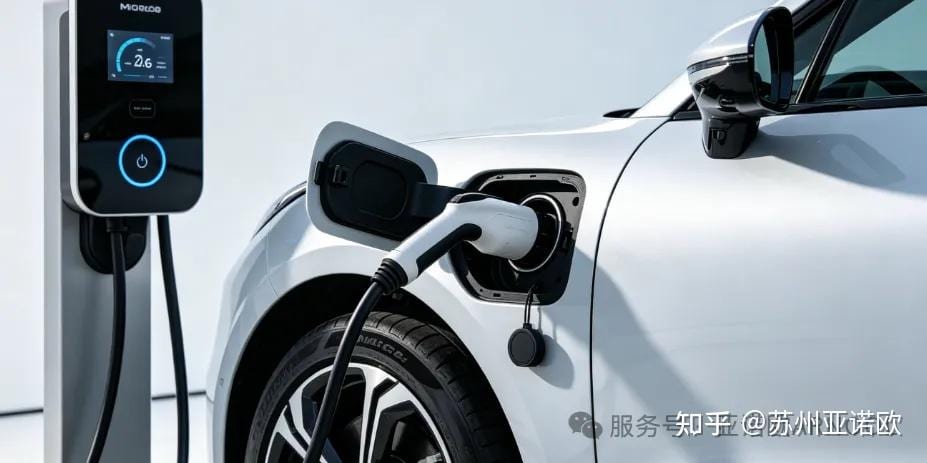
Demand for exporting DC EV charger products has been growing steadily recently, and many clients have inquired about the differences between European and U.S. certifications. The Arnool laboratory has compiled a comparison table of key differences for your reference:
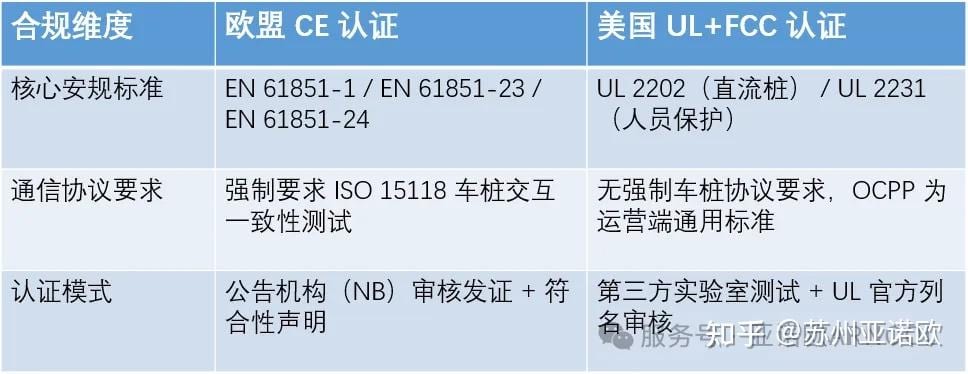
Suzhou Arnool

The Arnool laboratory can one-stop perform comprehensive safety testing for DC charging stations, as well as EMC and protocol compliance testing. It supports CB certification transfers and CE , and UL cross-regional certification recognition, precisely meeting the latest compliance requirements in Europe and the U.S. Additionally, with extensive industry experience, we provide enterprises with end-to-end services—from testing and rectification to certification agency services and compliance consulting—significantly reducing the costs and time associated with repetitive testing. This helps businesses quickly adapt to regulatory changes, ensures efficient export of goods, and mitigates compliance risks.
Please feel free to contact us for more information!