With the widespread adoption of new energy vehicles, the upgrading of smart grids, the commercialization of V2G vehicle-to-grid interaction, and the rapid growth in demand for plug-and-charge contactless charging, we have recently received a large number of inquiries from customers asking: What is ISO 15118? What does it actually mean for automakers, charging station manufacturers, operators, and users? Why is it referred to as the “core foundational standard” for next-generation smart charging?
In response, we have compiled relevant materials, provided a detailed breakdown of ISO 15118, and produced a series of articles and videos. As a professional organization with deep expertise in the new energy testing and certification sector, Arnool offers a full range of ISO 15118 testing, certification, and solutions to help enterprises quickly comply with global standards and bridge the critical gaps in the implementation of plug-and-charge and V2G technologies.
Next, let’s move on to the first article in our series: [A Must-Take Course for the Future of Global EV charger: PnC (Plug-and-Charge) + V2G (Vehicle-to-Grid Interaction)].
Q1 What exactly is ISO 15118? A one-sentence explanation
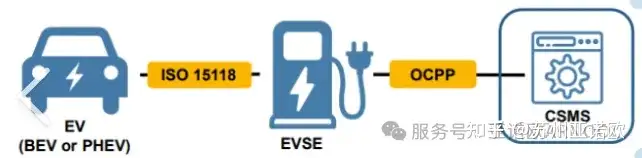
ISO 15118, whose full name is “Road Vehicle—Vehicle-to-Grid Communication Interface,” is an international standard for high-level digital communication between electric vehicles (EVs) and EV charger (EVSE). It serves not only as the “digital language” for vehicle-to-charger interaction but also as the core framework for realizing a smart charging ecosystem, specifically defining:
● Communication architecture and dialogue mechanisms: Based on PLC or wireless networks, it standardizes the high-level TCP/IP-based data exchange model between the vehicle side (EVCC) and the charging station side (SECC).
● Plug-and-Charge and PKI Security Authentication: Leveraging the V2G PKI infrastructure and digital certificate exchange, this standard enables automatic vehicle identification and seamless payment authorization, replacing traditional methods such as swiping cards or scanning QR codes.
● Intelligent Parameter Negotiation and Dynamic Scheduling: Not only does this negotiate basic voltage and current parameters, but it also dynamically establishes optimal charging and discharging schedules based on grid capacity, real-time electricity prices, and user travel plans.
● Bidirectional Power Transfer (V2G/BPT): Overcoming the limitations of unidirectional charging, this feature supports vehicles feeding power back into the grid, enabling vehicle-grid interaction scenarios such as peak shaving and valley filling, integration of renewable energy, and emergency power supply.
● End-to-End Security and Interoperability Assurance: Mandatory TLS encryption is used to counter security threats such as man-in-the-middle attacks, safeguard the integrity of billing data, and ensure seamless interoperability between vehicle and charging station brands worldwide.
Q2 Why has this suddenly become so important?
A Because global regulators have begun to “mandate” it.
1. The EU Authorization Regulation (EU) 2025/656 explicitly requires:
As of January 1, 2027, the requirements of the AFIR (Alternative Fuels Infrastructure Regulation) apply not only to public DC charging stations but also to all public and private installations and retrofits of AC and DC EV charger charging stations, which must comply with the new regulations. The era of traditional AC charging stations relying solely on PWM signals for charging is coming to an end in the EU; AC charging stations must be equipped with PLC communication boards to support the ISO 15118 protocol.
●Plug & Charge becomes a default capability
2. U.S. NEVI (a $7.5 billion federal program) requirements:
● DC charging stations must support ISO 15118
● Must support Plug & Charge