-Breaking News-
After an 8-Year Hiatus
5 New National Standards for EV charger Released
◀
(Includes partial interpretation)
▶
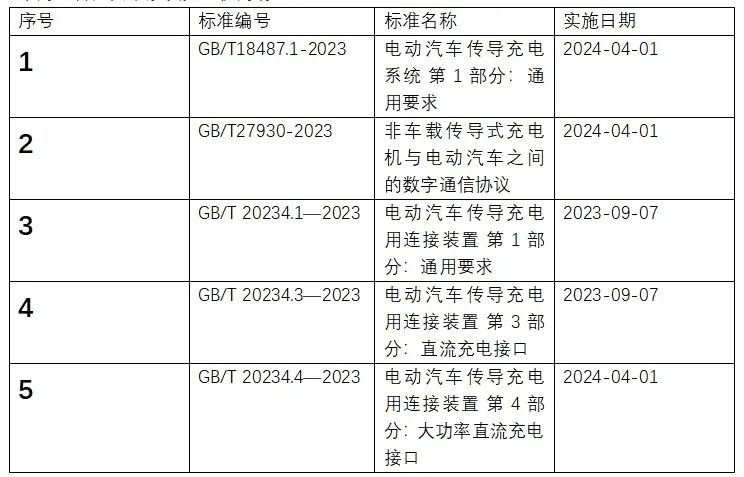
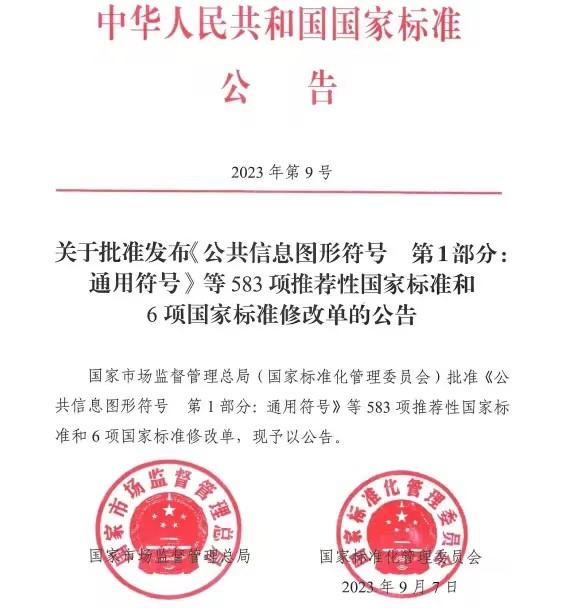
Recently, the Department of Standards and Technical Management of the State Administration for Market Regulation issued an announcement regarding 583 recommended national standards and 6 amendments to national standards. Among them, those related to EV charger include:
On December 28, 2015, five new national standards were issued; nearly eight years have passed since then, and these timely revisions will further promote the development of the industry.
1. Revision History of the
Standard
On September 7, 2023, two recommended national standards—GB/T 18487.1-2023 “Connecting Devices for Conductive Charging of Electric Vehicles—Part 1: General Requirements》 and GB/T20234.3-2023 《Connecting Devices for Conductive Charging of Electric Vehicles—Part 3: DC Charging Interfaces》—were officially issued by the State Administration for Market Regulation and the Standardization Administration of China. Of these, GB/T18487.1-2023 will take effect on April 1, 2024, while GB/T20234.3-2023 took effect on September 7, 2023.
2.
Background of the Standard Revision
China’s new energy vehicle fleet has grown from 580,000 units in 2015 to 16.2 million units in the first half of this year, rising from 0.34% to 4.94% of the total vehicle fleet. This means that nearly 5 out of every 100 vehicles are new energy vehicles. China’s new energy vehicle market has now transitioned from policy-driven to market-driven growth, and the country’s share of the global new energy vehicle market has exceeded 60%.
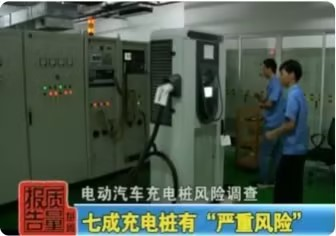
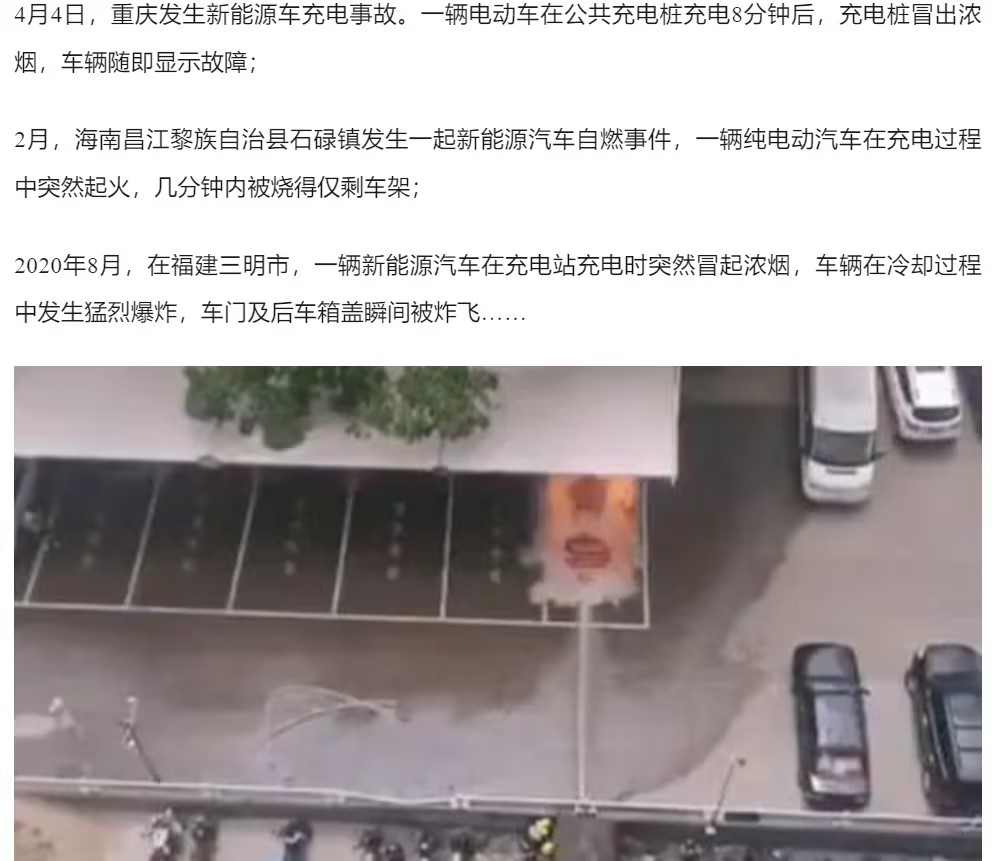
As the number of new energy vehicles in circulation continues to rise, EV charger infrastructure is also being rolled out nationwide at full speed. The China Electric Vehicle Charging Infrastructure Alliance released data on the operation of the national electric vehicle charging and battery-swapping infrastructure for August. The data shows that as of August 2023, the number of public EV charger units in service stood at 2.272 million, an increase of 61,000 units from July, representing a year-over-year growth of 39.9%. As the use of EV charger vehicles has become widespread, safety hazards associated with older EV charger units and various types of accidents have begun to occur frequently. The occurrence of these various issues and accidents has also spurred the need to revise the EV charger standards.
The overarching standard for charging equipment, GB/T 18487.1-2015 “Electric Vehicles—Conductive Charging Systems—Part 1: General Requirements,” has been in effect for eight years. The new standard, GB/T 18487 -2023 builds upon the relevant requirements of the original standard, incorporates lessons learned from various existing issues and hazards in the market, and introduces additional provisions with a focus on safety and reliability.
3.
EV charger Residual Current (Leakage Current) Detection Requirements
The new standard further raises the requirements for safety and reliability during the charging process. In particular, regarding residual current detection requirements for charging equipment, it proposes safer and more reliable protective measures compared to the original standard. We have compiled the similarities and differences in residual current protection requirements between the old and new standards to share with you.
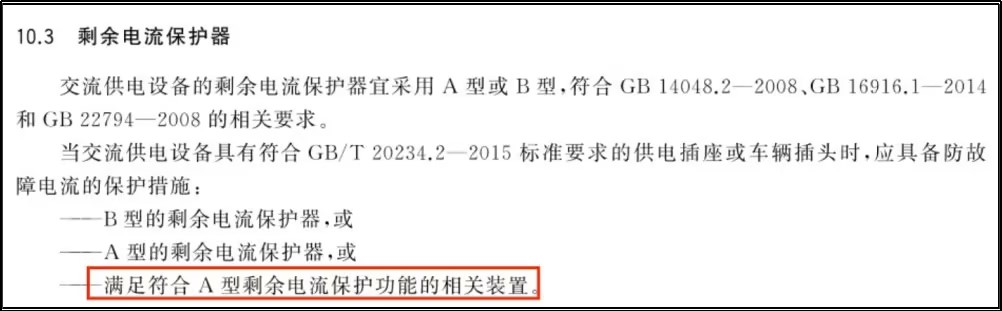
GB/T18487.1-2015 Protection Requirements for Residual Current in AC Charging Stations
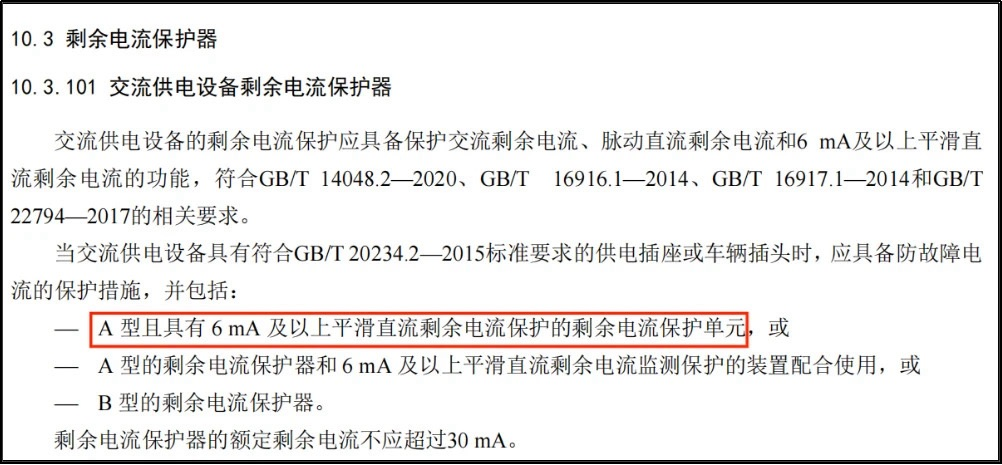
GB/T 18487.1-2023 Requirements for Residual Current Protection in AC Charging Stations
Section 10.3, “Residual Current Protectors,” of GB/T 18487.1-2023 explicitly requires that AC charging equipment be equipped with protective measures against fault currents: While the minimum residual current protection requirements are based on Type A residual current protection as specified in the 2015 edition of the standard, the 2023 edition additionally mandates protection against DC residual currents of 6 mA or higher.
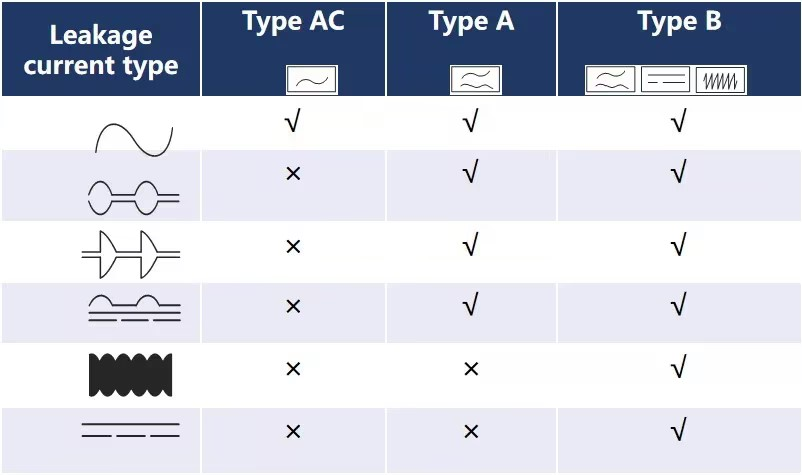
Current Waveforms for Various Types of Residual Current
The figure above shows the residual current protection waveform tables for various models, where Type A residual current protection covers both AC residual current and pulsating DC residual current. The new standard adds protection against smooth DC residual currents of 6 mA or higher. This is commonly referred to in the market as the “A+6” solution.
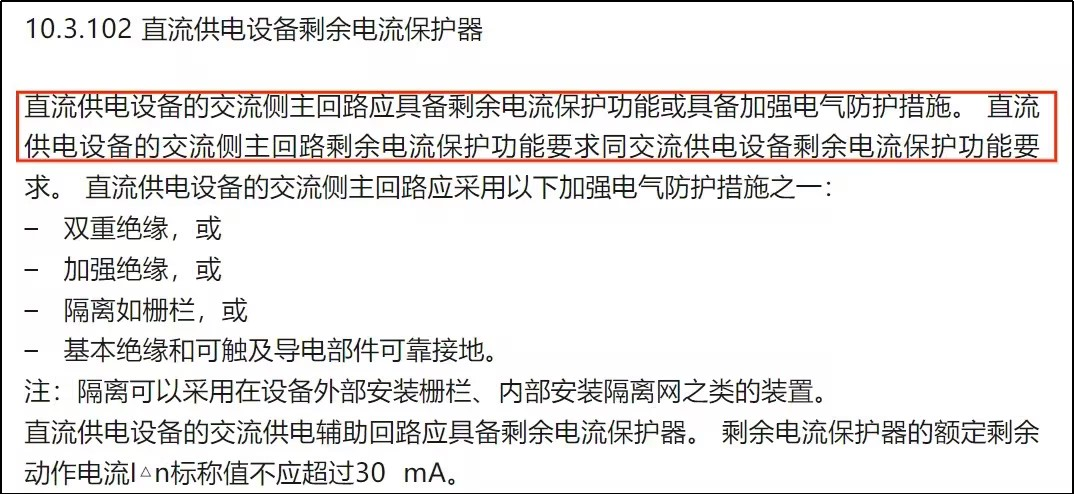
GB/T 18487.1-2023 Protection Requirements for Residual Current in DC Charging Stations
Additionally, Section 10.3.102 of the new national standard, “Residual Current Protectors for DC Power Supply Equipment,” proposes for the first time that DC charging stations may be equipped with protectors or protection units—with the same residual current protection functions as those specified in Section 10.3 for AC power supply equipment—to provide residual current protection for DC power supply equipment. This provision was not mentioned . Equipping DC charging stations with residual current protection will further enhance their safety and reliability.
Suzhou Arnool Specializing in the new energy sectorEV charger—including photovoltaic inverters, energy storage, and power batteries— technical consulting and testing services for market access regulations in Europe, Asia, North America, and other regions; we provide customized services tailored to client needs, standardized technical processes, and professional testing equipment to deliver one-stop solutions for enterprises. As a company specializing in testing, certification, technical services, and system training and guidance, we provide clients with services in Asia (CCC, CQC, SRRC, KC, PSE, BSMI, Spring, BIS, etc.), and Europe (CE, CB, GS, ENEC, UKCA, ERP, etc.), and North America (UL, ETL, CSA, FCC, DLC, NOM, etc.) for testing, inspection, and goods verification. Our main business scope covers numerous fields, including new energy EV charger, machinery and equipment, components, lighting fixtures, audio-visual equipment, and home appliances, and we provide clients worldwide with one-stop testing and certification services.
Some images are sourced from the internet; please contact us for removal if there is any infringement.
