

ISO 15118 In-Depth Analysis Series | Part 3 ISO 15118-2 Illustrated Guide to the Entire Charging Process: From Communication Handshake to Contact Detection—A Comprehensive Overview
Table of ContentsPart 1:
Essential Lessons for the Future of Global EV charger: PnC (Plug-and-Charge) + V2G (Vehicle-to-Grid Interaction)
WeChat Official Account: Arnool ARNOOL ISO 15118 In-Depth Analysis Series | Part 1: Essential Lessons for the Future of Global EV charger: PnC (Plug & Charge) + V2G (Vehicle-to-Grid Interaction)
Part 2:
Say Goodbye to Lagging QR Code Scans! Plug & Charge: The Future of Charging—Just Plug In and Go
WeChat Official Account: ArnoolARNOOL ISO 15118 In-Depth Analysis Series | Part 2: Say Goodbye to Laggy QR Code Scanning! Plug & Charge: The Future of Charging—Just Plug It In and Start Charging
Part 3: ISO 15118-2 Illustrated Guide to the Entire Charging Process: From Communication Handshake to Connection Detection—All Explained in One Article
Part 4: Earn Money Just by Parking: V2G How to Turn Electric Vehicles into the Power Grid’s “Mobile Power Reserves”
Part 5: One Car = One Power Station? ISO 15118-20: Turning V2G from Concept to Reality
Part
ISO 15118-2 is the “heart” of the entire series
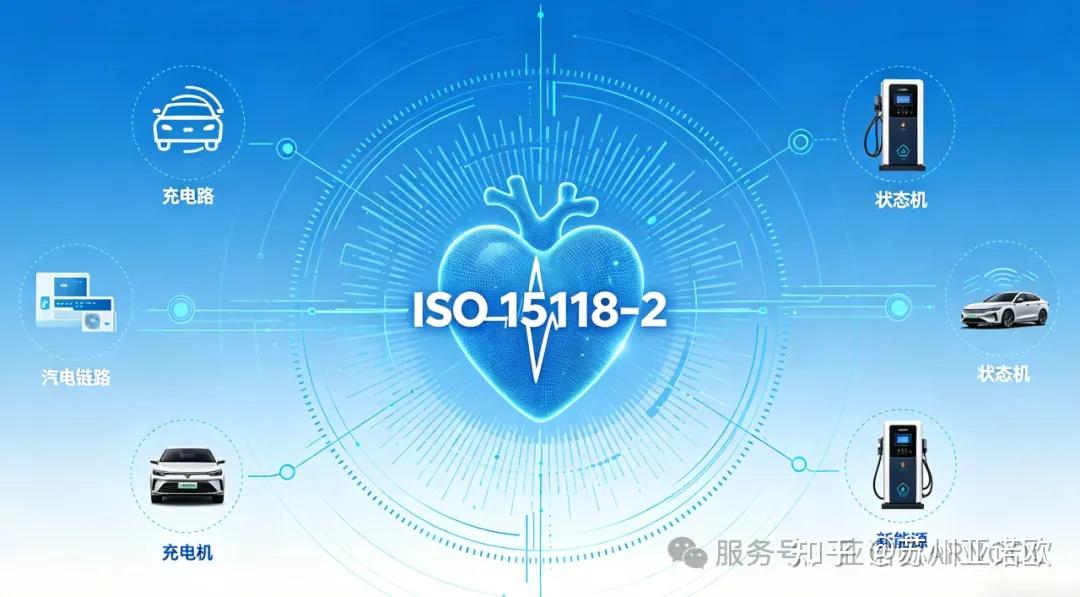
ISO 15118 is the international standard for vehicle-to-charger communication, ISO 15118-2, as a core subset, defines the underlying communication architecture, data exchange rules, and process specifications for vehicle-to-charger communication. It serves as the foundation for smart charging, and all charging-related operations rely on its standards.
Its core definitions include:
-
IPv6: The network layer protocol for vehicle-to-charger communication, which provides ample address space to ensure stable connections between vehicles, chargers, and backend systems.
-
TCP/TLS: Ensures reliable and orderly data transmission while encrypting and protecting the security of core data.
-
V2GTP: A vehicle-to-grid interconnection protocol that supports charging interactions and V2G reverse power transmission.
-
EXI Encoding: Compresses charging data to improve communication efficiency and accommodate high-frequency interaction scenarios.
-
All Charging Messages: Defines the message types and formats for the entire charging process to ensure vehicle-to-charger coordination.
-
All State Machine Flows: Standardizes the logic for vehicle-to-charger state transitions to prevent malfunctions and safety hazards.
II
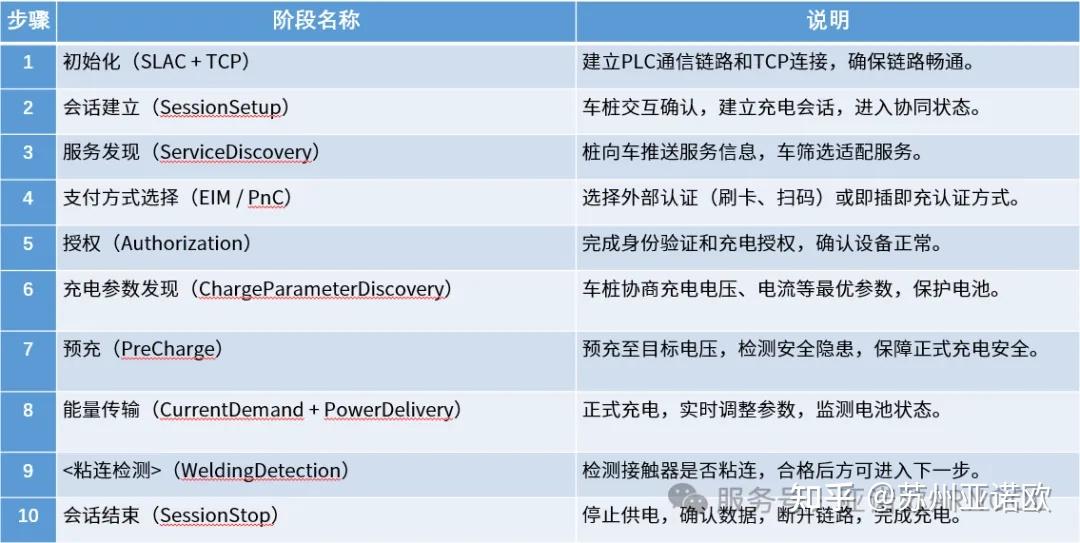
Complete DC Charging Process (10 Steps)
DC chargingmust follow the following 10 core stepsto ensure safety and efficiency; each step corresponds to standardized vehicle-to-charger interactions, Suzhou Arnool In its testing services , it strictly adheres to this standard process to conduct compliance testing on products such as the vehicle’s power battery system and DC EV charger, ensuring the safety and compatibility of product interactions .
Three
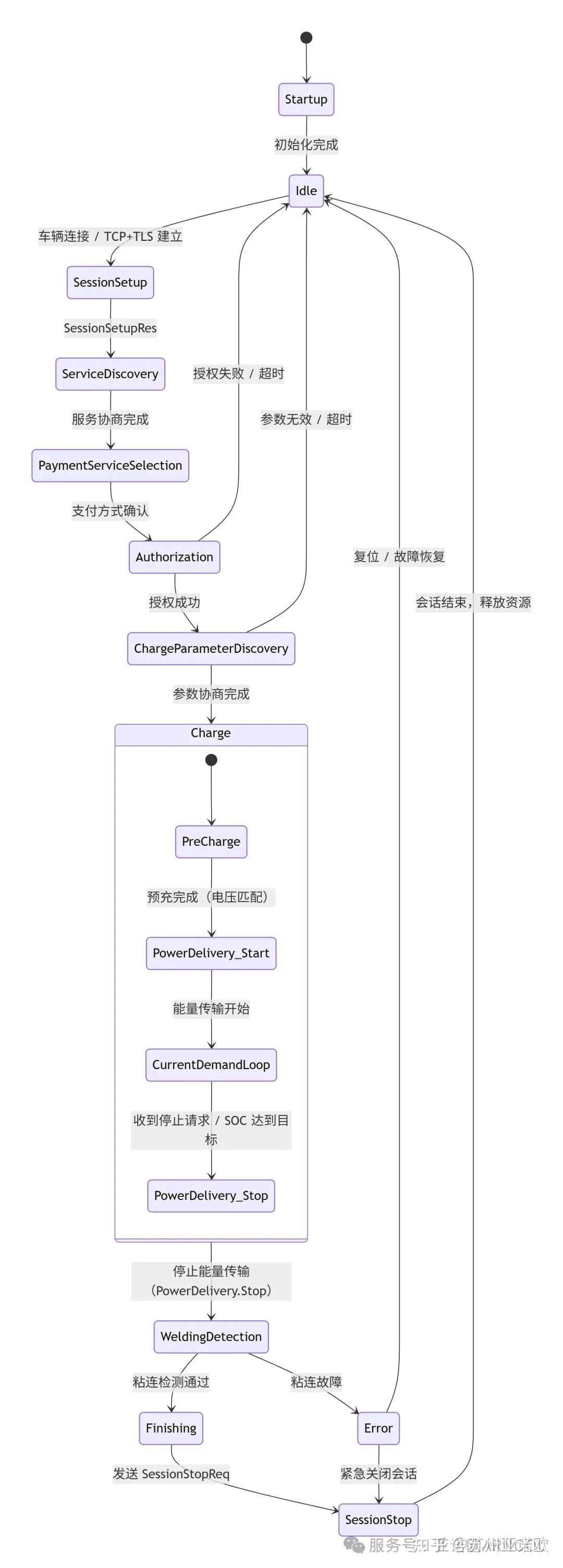
State Machine Diagrams
Four
Why is the state machine so important?
The state machineis the core of ISO 15118-2, and its importance is reflected in three key scenarios:
-
Test cases are primarily designed based on the state machine, covering state transitions, exception handling, and boundary conditions to ensure device behavior complies with standard requirements.
-
80% of interoperability issues stem from the state machine: Differences in state machine implementation are the primary cause of vehicle-to-charger incompatibility; standardized implementation is key.
-
Both vehicle and charging station manufacturers rely on it for debugging: it enables rapid identification of charging anomalies, improves debugging efficiency, and reduces costs.
Suzhou Arnool In vehicle-to-charger testing and debugging, the state machine serves as the core reference for troubleshooting vehicle-to-charger interoperability anomalies and verifying product compliance with standards, helping vehicle and charging station manufacturers resolve compatibility challenges.